
CAISO EDAM, SPP Markets+ and SPP RTO West
Understanding the market structures reshaping generation, transmission and large-load development across the Western Interconnection.
The Western Interconnection is entering a new chapter in wholesale electricity markets. A region long organized around individual balancing authorities, bilateral transactions and regional real-time coordination is adding broader day-ahead optimization and expanded RTO services.
Three developments sit at the center of this transition: the California Independent System Operator’s Extended Day-Ahead Market (EDAM), Southwest Power Pool’s Markets+, and SPP’s western RTO expansion, commonly called SPP RTO West. Each offers a different way to coordinate resources and transmission across the West.
For developers, IPPs, utilities, BESS owners and large-load customers, these changes raise practical questions about market access, congestion, delivery arrangements and project economics. Understanding the structure serving a project’s point of interconnection is becoming a core part of development and due diligence.
The central distinction: EDAM and Markets+ provide regional market participation; SPP RTO West brings participating systems into the SPP RTO framework.
Why the Western market is changing
The West’s resource diversity creates a strong case for regional coordination. California’s solar production, Pacific Northwest hydropower, and wind and thermal resources across the Mountain West can complement one another when transmission capability is available. Resource availability and load patterns vary by location and by hour.
Renewable development, storage growth, changing conventional-generation fleets and expanding industrial and data-center demand add to the value of planning across a larger footprint. Day-ahead optimization can coordinate commitments and transfers before the operating day, improving the system’s preparation for real-time conditions.
Broader optimization can improve the use of existing infrastructure. Its benefits still depend on available transmission, resource flexibility and the rules governing transactions between participating areas.
CAISO EDAM: a broader day-ahead horizon
EDAM extends CAISO’s day-ahead market optimization to participating Western balancing authority areas. It launched on May 1, 2026, with CAISO and PacifiCorp’s East and West balancing areas. Portland General Electric began participating on October 1, 2026, adding another Pacific Northwest system to the operating footprint.
EDAM builds on the Western Energy Imbalance Market (WEIM), which began in 2014. WEIM coordinates regional real-time energy dispatch; EDAM extends regional optimization into the day-ahead timeframe, when resources can be positioned to meet the next day’s forecast demand.
A practical example
Suppose California expects abundant solar output tomorrow afternoon while another participating area anticipates higher-cost local generation. Subject to transmission availability and market rules, EDAM can schedule an economic transfer in advance. This illustrative example shows how regional day-ahead coordination can use resource diversity before real-time operations begin.
Participating balancing authorities retain their autonomy and existing resource-planning responsibilities. EDAM’s daily Resource Sufficiency Evaluation accommodates different resource-adequacy frameworks. Participation does not require a utility to transfer its transmission system into the CAISO balancing authority area.
The footprint continues to expand
Announced 2027 entrants include the Los Angeles Department of Water and Power, Balancing Authority of Northern California, Public Service Company of New Mexico and Turlock Irrigation District. CAISO has also announced planned 2028 participation by NV Energy, Imperial Irrigation District and BHE Montana. These future entries should be tracked separately from the operating footprint.
DAM, DAME and EDAM describe different concepts: DAM is the day-ahead market; Day-Ahead Market Enhancements (DAME) are design changes to that market; EDAM expands regional participation in day-ahead optimization.
SPP Markets+: a separate Western platform
Markets+ is SPP’s regional day-ahead and real-time market for Western entities seeking market services without full SPP RTO membership. It is designed to centralize unit commitment and dispatch across participating systems and improve the use of available transmission.
FERC approved the Markets+ tariff in January 2025. The initiative is in Phase Two implementation, with an initial launch target of October 2027. Markets+ operates under its own market framework, separate from the SPP Integrated Marketplace used by the RTO.
SPP has identified Arizona Public Service, Powerex, Public Service Company of Colorado, Salt River Project and Tucson Electric among the entities with agreements for initial participation. Announced later entrants include Grant County PUD, Tacoma Power, Puget Sound Energy and Chelan County PUD, with participation planned in 2028. Bonneville Power Administration has also made a policy decision to pursue Markets+ participation.
Development support, funding commitments and operational participation are distinct stages. An entity’s role in development should not be treated as confirmation that all of its assets will enter the market at initial launch. Individual agreements, entry dates and asset arrangements determine the actual footprint.
EDAM and Markets+ share the goal of broader regional optimization. Their market designs, governance arrangements and implementation paths differ. Evaluating their effects on a project requires looking beyond the operator’s name.
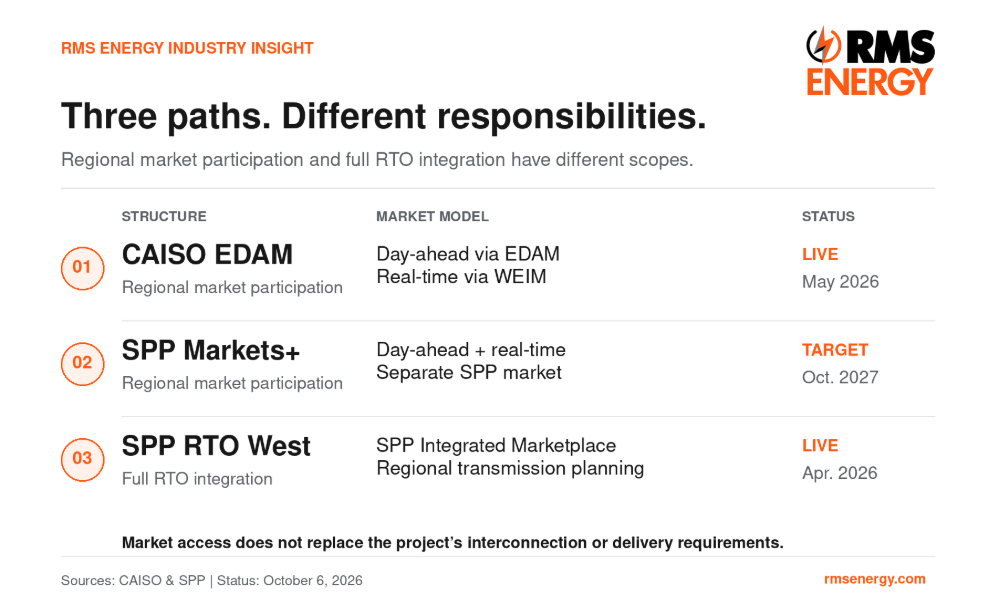
Figure 1. The scope of participation differs across the three Western market structures.
SPP RTO West: full RTO integration
SPP expanded its RTO services into the Western Interconnection on April 1, 2026, becoming the first RTO with services spanning the Eastern and Western Interconnections. The expansion brings participating Western systems into SPP’s broader framework for market operations, regional transmission planning and reliability coordination.
Nine lead load-serving entities drove the expansion:
- Basin Electric Power Cooperative
- Colorado Springs Utilities
- Deseret Power Electric Cooperative
- Municipal Energy Agency of Nebraska
- Platte River Power Authority
- Tri-State Generation and Transmission Association
- WAPA — Colorado River Storage Project
- WAPA — Rocky Mountain region
- WAPA — Upper Great Plains region
SPP’s published expansion roster also includes additional utilities and market participants. The nine lead entities should therefore be understood as the group that initiated the expansion, rather than the entire participant population.
For a project within the expanded RTO framework, the implications reach beyond energy dispatch. The applicable SPP tariff, regional planning processes and transmission-service arrangements become part of the project assessment. The relevant facilities and agreements matter: a company name or state boundary alone does not establish the rules applying to a particular site.
How the three structures compare
| Feature | CAISO EDAM | SPP Markets+ | SPP RTO West |
| Participation scope | Regional market | Regional market | Full RTO framework |
| Day-ahead market | EDAM | Markets+ | SPP Integrated Marketplace |
| Real-time market | WEIM | Markets+ | SPP Integrated Marketplace |
| Transmission planning | Existing provider framework | Existing provider framework | SPP regional framework |
| Launch / target | May 1, 2026 Operating | October 2027 Target | April 1, 2026 Operating |
Snapshot as of October 6, 2026. Future targets remain subject to implementation and participant readiness.
An expanding footprint and growing market seams
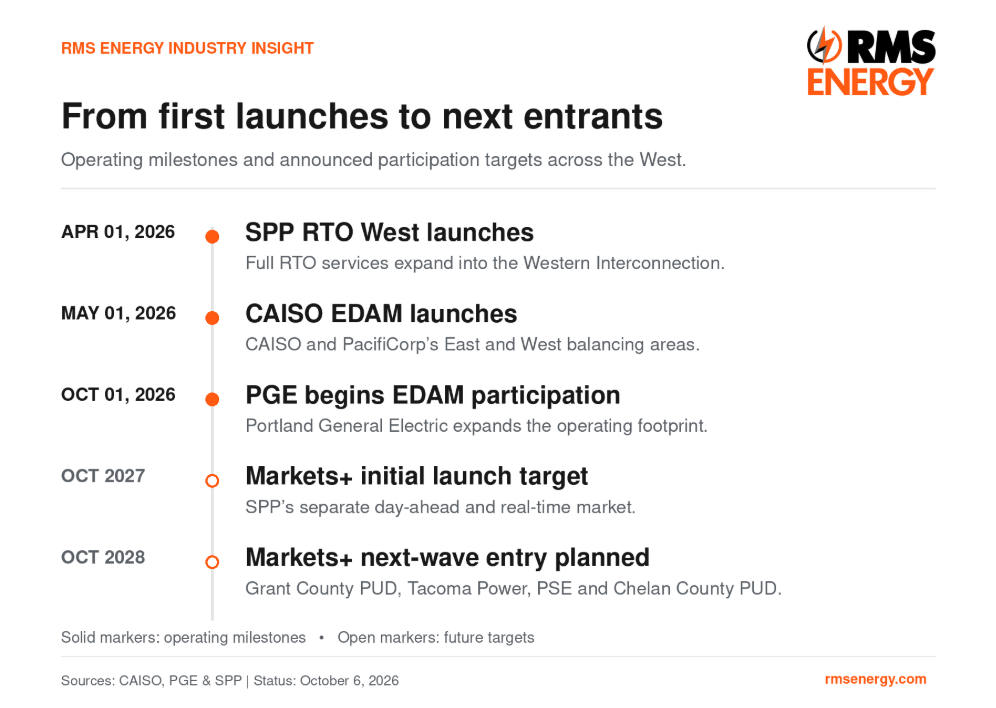
Figure 2. Operating milestones and announced future entry targets.
As the footprints develop, the interfaces between markets become increasingly important. Transmission paths connect systems operating under different scheduling, congestion-management and settlement arrangements. Transactions across these boundaries depend on both physical capability and coordinated operating rules.
On October 1, 2026, CAISO and SPP announced a joint report to FERC on Western market-seams coordination. Near-term priorities include better data exchange, model alignment, stakeholder education, support for loading-relief and curtailment tools, and processes addressing transmission constraints influenced by multiple market areas.
The operators also plan to formalize commitments through a coordination agreement and develop a longer-term approach to seams. A further joint workshop is scheduled for October 22, 2026. This work is a concrete step toward coordinating a West served by multiple organized markets.
RMS Energy’s project-development perspective: assumptions about exports, imports, curtailment and price exposure should reflect the market boundary a transaction crosses, alongside the transmission path it uses.
What this means for generation and BESS
For generation and storage developers, market changes can affect the commercial value of a location even when its physical point of interconnection remains the same. The following considerations are RMS Energy’s assessment of the practical implications.
Market access and project timing. Identify the day-ahead and real-time markets available at commercial operation, the scheduling arrangements and eligibility requirements, and any transition expected during development.
Congestion and curtailment. A larger dispatch footprint can change transfer patterns and local congestion. Additional trading opportunities may help renewable production reach other load centers, while binding transmission constraints can continue to limit deliveries. Project-specific studies should assess the net effect.
BESS revenue opportunities. Regional optimization can change hourly price patterns, day-ahead/real-time spreads and charging conditions. Storage economics should reflect the applicable market products, operating constraints, congestion and contractual arrangements.
Interconnection and delivery. A PacifiCorp-connected resource participating in EDAM continues to require the applicable PacifiCorp interconnection and transmission arrangements. Regional market entry does not by itself change the interconnection agreement or provide a new delivery right.
Technical due diligence. Assess the transmission provider, market operator, balancing authority and reliability responsibilities for the specific assets. Each layer contributes different obligations and risks.
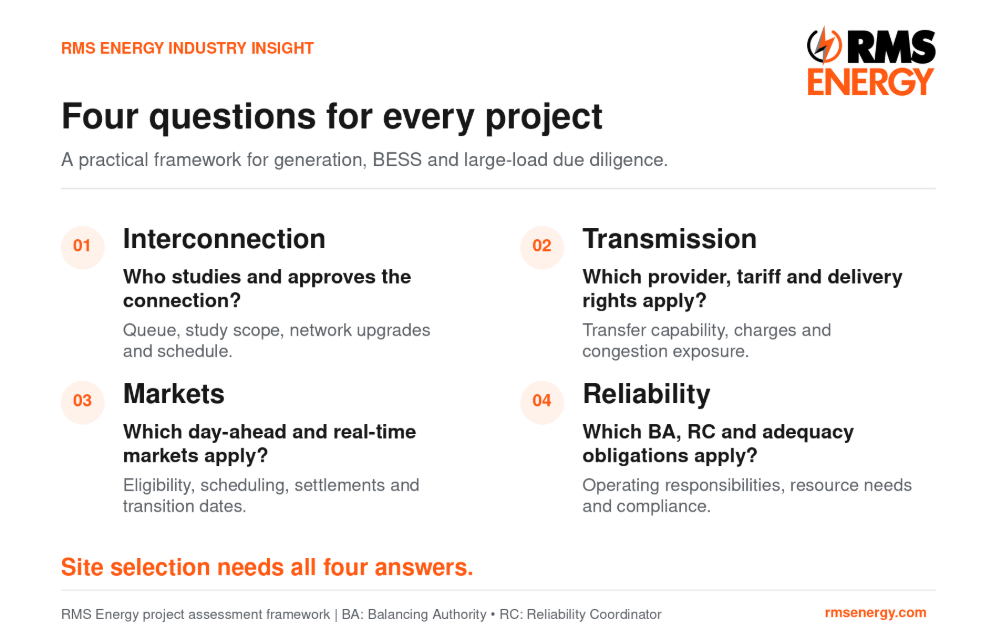
Figure 3. RMS Energy’s framework separates the four project-assessment questions.
What this means for large loads and data centers
For large-load customers, the market structure serving a site can be as important as the physical connection. This is RMS Energy’s assessment of how the emerging Western structures should enter site-selection and procurement decisions.
Two sites with similar voltage and apparent available capacity may have different energy-procurement options, congestion exposure, transmission charges, resource-adequacy responsibilities and implementation timelines. The serving utility’s tariff, contracts and regulatory framework determine how wholesale market outcomes reach the customer.
Due diligence should establish which utility and transmission provider serve the site; which day-ahead and real-time markets apply; what network upgrades and delivery arrangements are needed; and who is responsible for reliability, resource adequacy and procurement as the load ramps.
For data centers and industrial facilities connecting in phases, these questions should be evaluated for each planned in-service year. A market transition during construction or expansion can change the assumptions behind a long-term power-supply strategy.
The bigger picture
The Western Interconnection is developing a more coordinated electricity system through multiple market structures. EDAM and Markets+ expand regional market participation, while SPP RTO West provides broader RTO integration. Their success will depend on resource diversity, transmission availability, participant readiness and effective coordination at market seams.
For developers, IPPs, utilities and large-load customers, these changes belong in interconnection strategy, transmission analysis, generation siting, BESS valuation and M&A due diligence. Understanding the rules that apply at a project’s specific location provides the foundation for informed development decisions.
RMS Energy Industry Insight
RMS Energy supports generation, BESS, transmission and large-load/data-center clients across U.S. ISO/RTO and non-RTO regions with interconnection studies, transmission planning, power-system modeling, EMT analysis, model development and validation, NERC compliance and technical due diligence.
Explore RMS Energy Industry Insights
Official sources
Verified October 6, 2026. The project implications above reflect RMS Energy’s analysis.
CAISO — EDAM launch, May 1, 2026
CAISO — EDAM design fact sheet
PGE — EDAM operations begin, October 1, 2026
CAISO — NV Energy agreement and future EDAM entrants
SPP — Markets+ overview and implementation
SPP — Initial Markets+ signatories and 2028 commitments