

(Key takeaways from the Aug. 25–26, 2026 Joint ESWG–TWG meeting | By RMS Energy )
THE CENTRAL SHIFT: SPP is redesigning not only what gets studied, but how projects enter the planning process, how model data is submitted, and how distributed-energy-resource performance expectations are translated into regional guidance.
Three initiatives, one operating theme
At the Aug. 25–26 Joint Economic Studies Working Group and Transmission Working Group meeting, three agenda items stood out for developers, utilities, transmission customers, and model-data teams: the Consolidated Planning Process Phase 2 policy paper, the Unified Submission Portal, and SPP’s recommendations based on IEEE 1547-2018.
The topics address different parts of the grid-planning lifecycle, yet they point in the same direction: earlier project readiness, faster study decisions, better data quality, and clearer expectations for resources connected across the transmission–distribution boundary.

1. CPP Phase 2 adds a speed-to-power lane
The CPP Phase 2 policy paper continues SPP’s effort to coordinate reliability, economic, public-policy, transmission-service, and large-load needs through a more integrated planning framework. Its guiding principles include optimized transmission solutions, use of the existing funding framework, flexibility, speed to power, and greater cost certainty.
For transmission service, SPP proposes two Aggregate Transmission Service Study cycles. Cycle 1 would align with the CPP Integrated Conceptual Study window and feed the optimization process. Cycle 2 would occur in the second half of the CPP cycle as an off-cycle route for urgent resource-adequacy needs and congestion hedging, with Notifications to Construct expected after that study concludes.
Large-load requests under Attachments AQ and AX would likewise have two paths. CPP Optimization would place needed upgrades into the next available CPP cycle. Speed to Power could produce project-specific upgrades and an NTC directly from the AQ/AX process. Readiness requirements—including an executed study agreement, a defined load ramp, deposits or fees, site control where applicable, and planned generation for AX requests—are intended to keep speculative demand from driving premature investment.
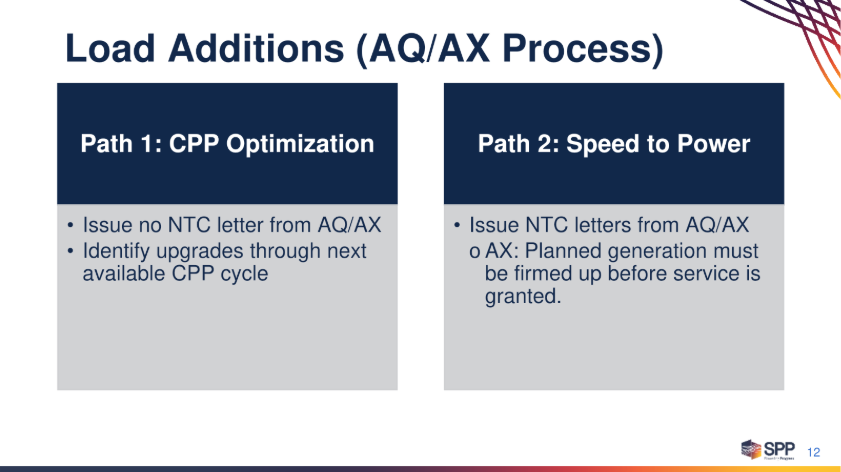
Figure 1. SPP proposes CPP Optimization and Speed to Power as two pathways for new load additions under Attachments AQ and AX.
The Conditional High Impact Large Load concept adds another bridge. A load could proceed with transmission-limited service or bring accredited generation, then convert to Network Integrated Transmission Service when the required solution is available. For large-load developers, this makes service strategy, generation strategy, and schedule strategy inseparable.
2. The Unified Submission Portal treats data quality as schedule certainty
SPP’s Unified Submission Portal is designed to replace multiple disconnected intake tools with one modern workflow. Instead of waiting for batch processing to reveal errors, users would receive automated validation and feedback as files are prepared and submitted. A File Inspector would support interactive review, while an Activity Panel would create a chronological audit trail for collaboration and accountability.
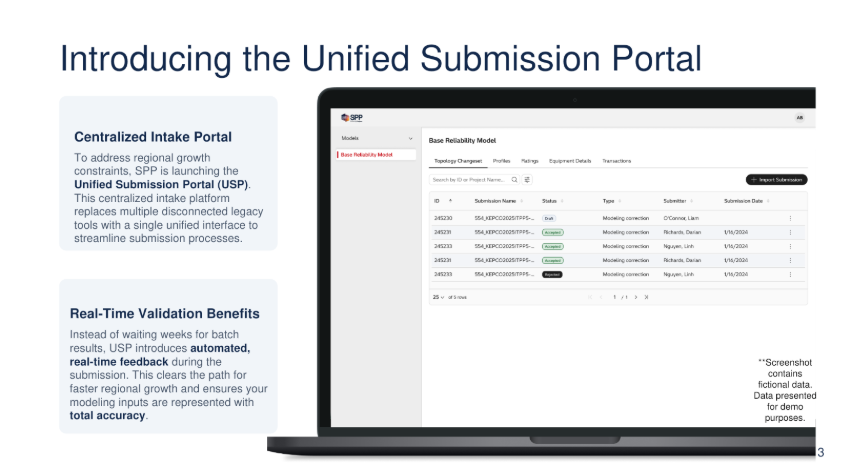
Figure 2. The Unified Submission Portal is intended to centralize intake and provide real-time validation before model data enters downstream studies.
The initial scope is substantial: all data currently submitted through MOD, 97% of data currently submitted through EDST, and all member data. Only a narrow set of outage, load-detail, and two-terminal DC-tie files would remain in EDST at launch. This matters because data errors do not remain isolated—they can delay model builds, trigger rework, and reduce confidence in study results.
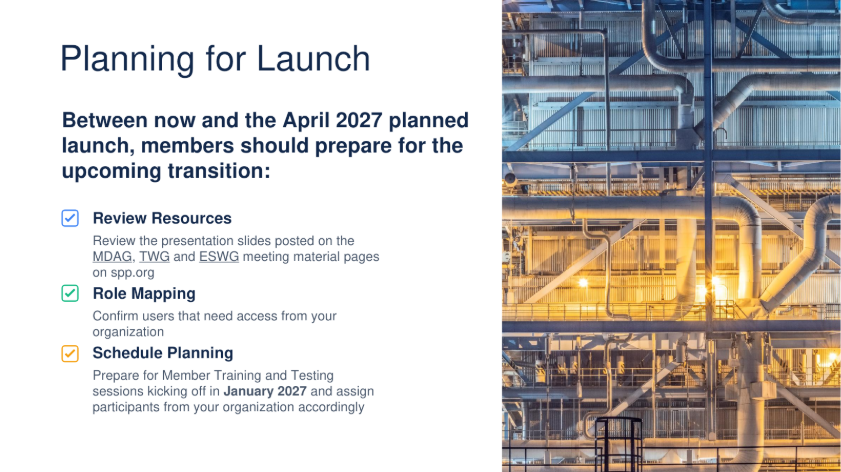
Figure 3. SPP is asking members to prepare users and schedules ahead of the planned April 2027 portal launch.
Member training and testing are expected to begin in January 2027, followed by a planned April 2027 launch. Organizations should use the intervening months to identify portal users, map responsibilities, standardize internal review, and clean recurring data-quality issues before they reach SPP’s validation layer.
3. IEEE 1547 guidance brings DER behavior into regional reliability planning
SPP’s proposed recommendations based on IEEE 1547-2018 and IEEE 1547a-2020 address the growing reliability importance of distributed energy resources. The underlying objective is to reduce unnecessary tripping and improve voltage, frequency, and ride-through performance as DER penetration increases—while still respecting distribution protection, islanding, voltage-rise, and worker-safety requirements.
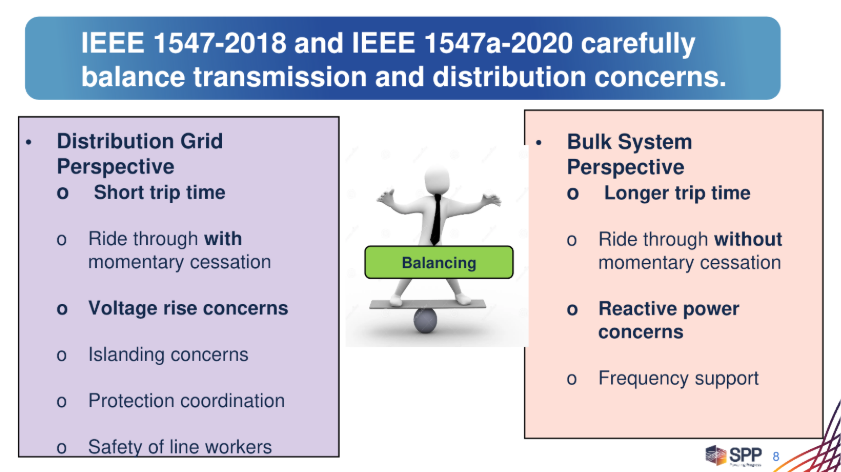
Figure 4. SPP’s recommendations must balance distribution-system protection and safety with bulk-system ride-through, reactive-power, and frequency-support needs.
The standards represent a meaningful evolution. Earlier requirements emphasized tripping during abnormal voltage or frequency conditions; the 2018 standard requires DER capability for voltage regulation, ride-through, and frequency response, while the 2020 amendment adds flexibility for Category III voltage ride-through settings.
SPP’s guideline and Technical Interconnection and Interoperability Requirements are being developed as recommendations, not mandatory or enforceable requirements. Working-group review is planned through the third and fourth quarters of 2026, approvals are targeted for the first quarter of 2027, and MOPC consideration is shown for April 2027. Stakeholder comments are requested by Sept. 10, 2026.
What stakeholders should do now
- Choose the planning lane early. Test whether a project fits CPP optimization or requires the cost and commitment of a speed-to-power path.
- Build readiness evidence. Align study agreements, load ramps, deposits, site control, and any planned generation before entering AQ, AX, or CPP processes.
- Prepare for the portal transition. Assign USP roles, inventory recurring submissions, and resolve data-quality issues before member testing begins.
- Review DER settings and contracts. Compare ride-through, protection, reactive-power, and frequency-response practices with the proposed regional guidance.
- Engage while the details are open. Use the stakeholder process—particularly the Sept. 10 IEEE-comment deadline—to flag implementation and coordination concerns.
RMS Energy perspective
These initiatives show SPP moving toward a planning environment in which speed depends on discipline. Faster study paths require credible readiness. Better study results require clean, traceable model data. Higher DER penetration requires performance settings that reflect both local distribution needs and bulk-system reliability.
For developers and transmission customers, the practical advantage will come from integrating planning, data governance, equipment settings, commercial commitments, and stakeholder engagement before a request reaches the formal study queue. The organizations that prepare those pieces together will be best positioned to use SPP’s evolving framework effectively.
#SPP #TransmissionPlanning #GridReliability #LargeLoads #DER #IEEE1547 #EnergyTransition #RMSEnergy