
SPP’s Sept. 11 MOPC education session focused on a major planning choice: whether to limit near-term transmission development to reliability and ERAS needs, or move toward a forward-looking portfolio built around a regional 765 kV backbone. The material is still part of the 2026 ITP and CPP Transition Study process, but the scale of the decision is becoming clearer.
Minimum build vs. a forward-looking portfolio
SPP compared a minimum transmission build with a broader NTC portfolio. The minimum-build path starts with lower capital cost, but SPP’s analysis shows additional exposure from market costs, emergency-energy mitigation, and limited room for new load.
- Minimum build: about $8-$10 billion in E&C cost, with total known exposure by 2035 estimated at roughly $17.2-$19.2 billion.
- Forward-looking NTC portfolio: about $15-$25 billion in E&C cost, greater regional transfer capability, and up to roughly 40 GW of load headroom.
- SPP’s education material shows an estimated benefit-to-cost range of about 15-20:1 for the forward-looking option.
These are planning estimates rather than final approved costs, but they show why SPP is evaluating the decision as more than an upfront capital comparison.
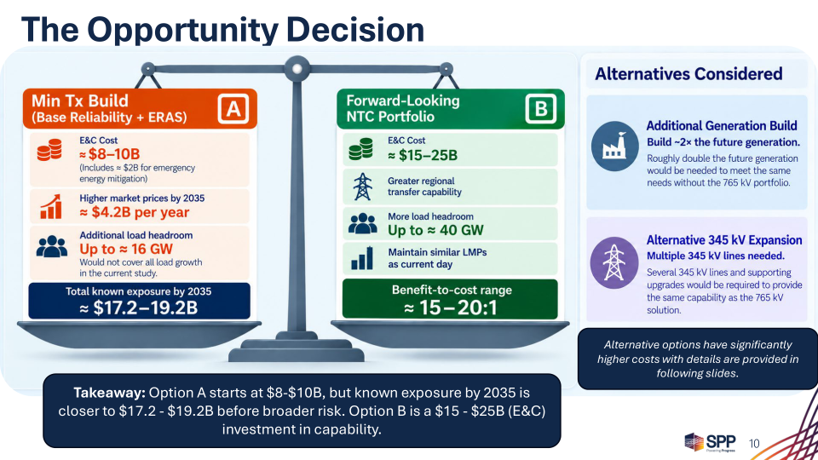
Figure 1. SPP comparison of the minimum transmission build and forward-looking NTC portfolio.
Source: SPP, “2026 ITP and CPP Transition Study – MOPC Education Session,” Sept. 11, 2026, slide 10.
Congestion is already changing the planning baseline
SPP’s historical comparison shows net congestion cost rising from $457 million in 2019 to $1.9 billion in 2024, a 316% increase, while annual energy increased 8% and the referenced natural-gas price was slightly lower.
The operating data point in the same direction: transmission emergencies increased from one in 2022 to 16 in 2025, and SPP reports that constraint activity in 2025 was about 57% higher than in 2016.
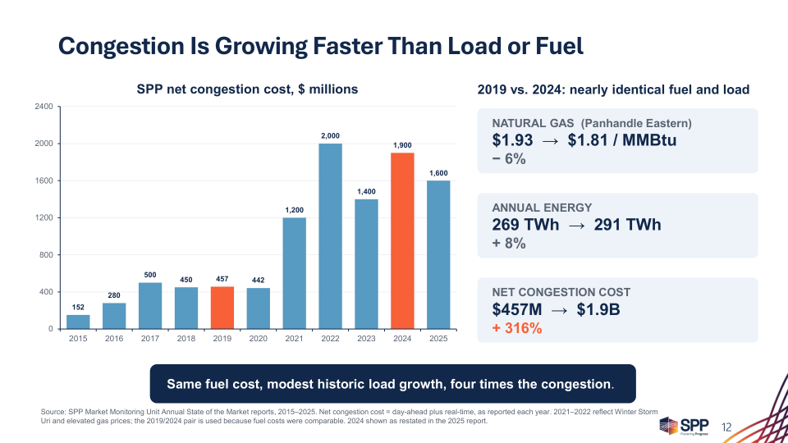
Figure 2. SPP net congestion cost compared with load and fuel trends.
Source: SPP, “2026 ITP and CPP Transition Study – MOPC Education Session,” Sept. 11, 2026, slide 12.
Load growth is translating into more system needs
SPP reported that 2026 peak demand is nearly 19% above 2020 and 9% above 2022. Looking toward 2035, every SPP deliverability area shows growth when firm-service load and high-confidence spot loads are combined.
That growth is showing up directly in the planning study. SPP identified nearly five times more system needs than in any previous ITP, covering thermal overloads, voltage issues, market constraints, generator interconnection, and load growth. More than 8,200 stakeholder solutions, plus thousands of staff-developed alternatives, were evaluated.
Why SPP is emphasizing 765 kV
The education session also compared 765 kV development with a 345 kV alternative at similar transfer levels. In SPP’s illustrative comparison, the 345 kV approach would require 41 lines versus nine 765 kV lines and would cost more than 1.9 times as much.
The issue is not only line cost. More circuits also mean more right-of-way, additional terminal equipment, and a more complex network to operate. That is why SPP is treating the 765 kV concept as a regional transfer backbone rather than simply a higher-voltage replacement for individual projects.
Draft portfolio economics and transition plan
The current transition plan stages the 765 kV build across multiple ITP cycles. For the 2026 ITP NTCs in the South and Central deliverability areas, SPP shows a $15-$25 billion cost range and a conservative 40-year benefit-to-cost estimate of 2-3:1 for the 765 kV portion alone.
The presentation also shows higher benefit-to-cost results when the full study portfolio is considered, and notes that pairing 765 kV facilities with targeted lower-voltage upgrades improves overall system performance. These values remain draft and are expected to change as projects are consolidated and final assessments are completed.
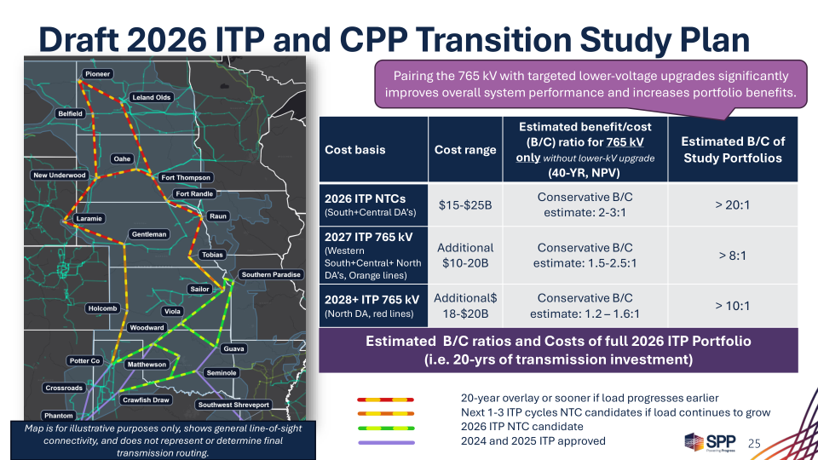
Figure 3. Draft 2026 ITP and CPP Transition Study plan for the 765 kV overlay.
Source: SPP, “2026 ITP and CPP Transition Study – MOPC Education Session,” Sept. 11, 2026, slide 25.
Decision timeline
SPP is finalizing benefit metrics, reliability assessments, sensitivities, rate impacts, and the report. The education-session timeline lists ESWG/TWG final approval for Sept. 25, MOPC final approval for Oct. 14, and Board final approval for Nov. 17, 2026.
RMS Energy perspective
For developers, utilities, and large-load customers, the key issue is not simply 765 kV versus 345 kV. SPP is weighing whether near-term savings from a smaller build are worth the longer-term exposure to congestion, reduced transfer capability, and tighter load headroom.
The portfolio is still draft, so project scope, cost, and benefit assumptions should be treated as planning estimates until the approval process is complete. What is already clear is that load growth and transmission capability are now being evaluated together at a much larger regional scale.
Learn how RMS Energy supports complex transmission projects through our T&D engineering and consulting services
#SPP #TransmissionPlanning #ITP #765kV #GridReliability #LargeLoads #PowerSystems #RMSEnergy