

Methodology and limitations across PJM MISO SPP CAISO ISO New England NYISO and ERCOT
Research verified October 10 2026
A favorable point of interconnection heat map can help a developer identify where to investigate. The displayed megawatts are a screening estimate under a defined set of assumptions. They do not establish an approved export limit, reliable load supply, capacity deliverability, or the cost and schedule of connecting a specific project.
That distinction matters for generation developers, battery storage owners, and data center customers. A map may screen incremental generation injections while the commercial decision depends on a different question: whether the project can export energy, receive power in charging or load mode, or qualify as a deliverable capacity resource. Each question requires its own study scope.
What a POI heat map measures
FERC Order No. 2023 introduced a public heat map requirement to improve information available before projects enter interconnection queues. Its purpose is to support siting decisions by showing available transmission capacity and expected congestion. Regional tariffs and implementations determine what the displayed results actually represent.
The common screening framework uses a planning power flow model, applies a hypothetical injection at a selected bus, and balances that injection elsewhere in the modeled system. It evaluates the resulting impacts on monitored transmission facilities under selected contingencies.
Order 2023 screening is based on N-1 conditions, meaning the system is assessed after the loss of a single element. Regional implementations may approximate network or capacity interconnection service by transferring output toward the provider’s broader footprint and accounting for existing and queued generation.
A distribution factor expresses how much a facility’s real power flow changes for each megawatt of the specified transfer. In a linear screen, a 200 MW injection with a 20 percent distribution factor adds approximately 40 MW to that facility. The balancing source or sink is part of this result: a factor calculated against one dispatch or receiving area does not automatically apply to another.
Illustrative calculation: assume a monitored facility has 100 MW of remaining margin and an incremental injection increases its flow by 20 percent of the injected MW. That constraint permits about 500 MW of additional injection before the margin is exhausted. If another constraint has 60 MW of margin and a 30 percent factor, it permits only 200 MW. The second constraint governs this simplified thermal screen. These are hypothetical values, not results for an actual POI.
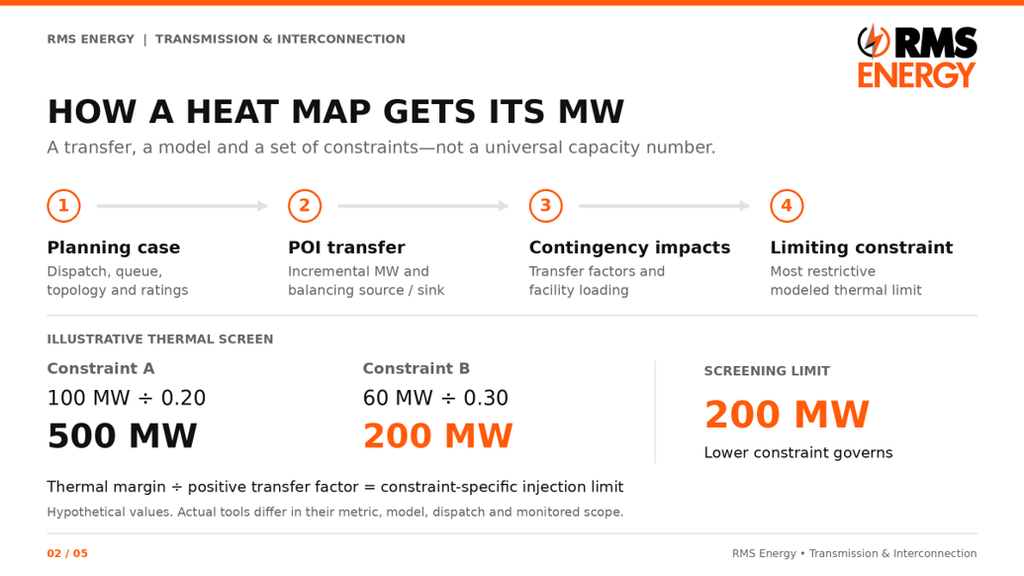
Figure 1. A hypothetical thermal screen is governed by the more restrictive constraint.
Read the metric before reading the color. Facility headroom in MW, estimated allowable injection at a POI, loading percentage, and a geographic contour of affected facilities are different outputs. A displayed “capacity” value may refer to a transmission limit rather than an accredited capacity product.
How the regional tools differ
The seven regions do not provide one interchangeable product. The following descriptions reflect the official material reviewed, including ISO New England’s October 2026 guide. Where an implementation detail or public tool could not be verified, it is identified rather than assumed.
PJM Queue Scope
Queue Scope lets users screen proposed MW injections or withdrawals and estimate grid impacts. Its evaluator distinguishes an RTEP base case containing generators with executed interconnection agreements from queue or cycle cases that include active projects through the study cycle and modeled baseline upgrades. The selected case therefore materially affects the result.
PJM expressly limits Queue Scope to thermal impacts and excludes voltage, stability, and short-circuit constraints. Its results may omit assumptions used in formal interconnection studies and do not reflect current operating conditions. A favorable screen does not establish Capacity Interconnection Rights or complete PJM’s generator deliverability testing.
MISO Points of Interconnection Analysis Tool
MISO identifies its POI tool as a way to pre-screen potential constraints at existing POIs. Users select a location, enter requested MW, and can filter by voltage. MISO’s published technical overview describes the tool as a screen for excessive thermal overloads and says it excludes voltage and stability constraints.
This supports an early shortlist, but users should verify the displayed study cycle, case assumptions, and model refresh. The tool’s output should not be treated as a completed Definitive Planning Phase study or as a determination of NRIS deliverability. MISO also allows certain ERIS capacity to demonstrate deliverability through qualifying firm transmission service; the map alone establishes neither route.
SPP Hosting Capacity Tool
SPP’s HCT uses selected models, buses, voltage levels, and MW transfers to show pre-shift and post-shift impacts. Its table reports monitored facilities, contingency elements, shift factors, loading, and available margin. The May 2025 guide describes the contour as loading percentages calculated from the nearest 12 monitored-facility data points. The color is therefore not a parcel-specific entitlement to interconnect.
The guide also describes models without upgrades, decrements for generation at the same POI, and limitations on showing contingent upgrades. Its “Available Capacity” column is remaining margin on a monitored facility under a contingency, which differs from the maximum injection at a selected POI. Check the active model and current guidance before using either output to rank sites.
CAISO Points of Interconnection Heatmap
CAISO’s heatmap shows ISO-controlled POIs and available capacity derived from a transfer-limit assessment. Its FAQ makes a critical distinction: the heatmap is different from the deliverability study behind the Constraint Mapping spreadsheet, which is the more appropriate source for available Transmission Plan Deliverability behind known area constraints. The FAQ also states that the heatmap includes P1 contingencies.
A heatmap result therefore cannot be substituted for a project’s deliverability assessment or TPD allocation. Full or Partial Capacity Deliverability Status involves additional requirements and allocation or retention processes. Separately, CAISO publishes POI restrictions and availability information for Cluster 16; electrical screening and practical availability of a connection are separate checks.
ISO New England POI Analysis Heatmap
The October 2026 guide describes a DC power flow screen consistent with the Capacity Capability Interconnection Standard, while explicitly distinguishing it from a formal CCIS analysis. It uses DFAXs to estimate injection impacts for a selected cluster and scenario. The base map shows the minimum available MW across constraints at each POI; the analysis table uses a 3 percent DFAX criterion relative to the applicable load zone.
The guide says tests at multiple POIs are not cumulative. Interfaces may appear in the table without appearing on the map. Its disclaimer also excludes affected-system impacts and a complete assessment of voltage, fault duty, stability, and EMT behavior. The tool is informative for approximate CNRIS capability, not an official interconnection determination.
NYISO POI heatmap methodology
NYISO Attachment HH Section 40.4.1 describes an N-1 estimate of incremental injection capability. It specifies a transfer from the selected POI toward the whole New York State Transmission System to approximate Capacity Resource Interconnection Service, with decrements for existing and queued facilities. Required metrics include distribution factors, MW impacts, and facility loading before and after the proposed injection.
The tariff states that this information is for informational purposes and that ERIS or CRIS must be obtained through the interconnection procedures. This description is grounded in the published tariff methodology; it does not certify the live tool’s current model vintage or available MW. A thermal estimate cannot establish the System Deliverability Upgrades, costs, or final CRIS outcome for a project.
ERCOT requires a separate interpretation
A comparable ERCOT-issued public POI injection heatmap was not verified in this review. Commercial maps for ERCOT should identify their owner, case vintage, dispatch, contingency set, and whether they screen generation, load, or both. Their estimates should not be presented as ERCOT-approved interconnection capability.
ERCOT describes generation interconnection as a connect-and-manage process in which deliverability is not guaranteed and real-time congestion management remains relevant. ERCOT also operates an energy-only wholesale market, so a capacity-deliverability label borrowed from PJM, NYISO, or CAISO is inappropriate. Project reliability studies and congestion or curtailment analysis remain separate tasks.
Energy service and capacity deliverability use different tests
An energy injection study examines the project’s ability to export under the applicable interconnection criteria. A capacity or network deliverability assessment tests the resource under a defined dispatch and demand framework for a different service objective. A heat map that approximates capacity service still does not complete that assessment, allocate rights, or establish capacity accreditation.
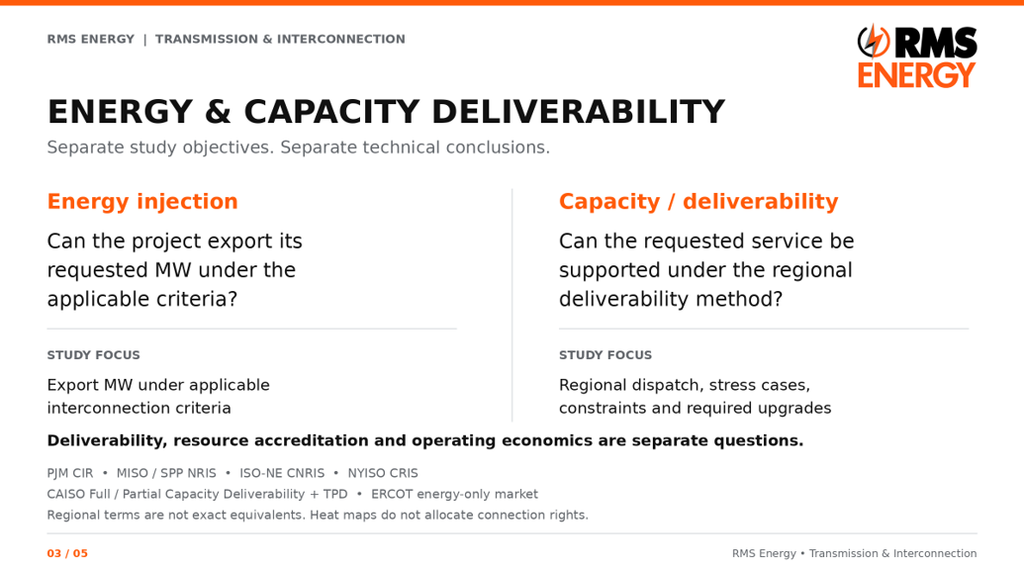
Figure 2. Energy injection and capacity deliverability answer different technical questions.
Regional terms help identify the requested product, but they are not exact equivalents. The distinctions below are a guide to framing the study scope, not a substitute for each tariff’s definitions.
| Region | Energy or basic interconnection terminology | Capacity or deliverability terminology |
| PJM | Energy injection capability and maximum facility output | Capacity Interconnection Rights and generator deliverability |
| MISO | Energy Resource Interconnection Service ERIS | Network Resource Interconnection Service NRIS or qualifying ERIS plus firm transmission |
| SPP | Energy Resource Interconnection Service ERIS | NRIS with applicable transmission service and resource adequacy requirements |
| CAISO | Energy Only | Full or Partial Capacity Deliverability Status and applicable TPD requirements |
| ISO New England | Network Resource Interconnection Service NRIS | Capacity Network Resource Interconnection Service CNRIS |
| NYISO | Energy Resource Interconnection Service ERIS | Capacity Resource Interconnection Service CRIS |
| ERCOT | Generation interconnection in an energy-only market | No equivalent centralized capacity interconnection product in this comparison |
MISO’s treatment of ERIS paired with firm transmission illustrates why it is too broad to say that every energy-only resource is categorically excluded from capacity qualification. SPP transmission service arrangements also
need to be evaluated for the intended use. Deliverability, resource accreditation, and commercial dispatch priority are separate concepts.
For example, PJM’s formal generator deliverability method considers stressed dispatches, seasonal resource output assumptions, and single or common-mode contingencies. This is substantially more specific than checking a favorable thermal screen at the same bus. Deliverability status also does not promise congestion-free operation or a particular energy price.
Withdrawal studies need their own assumptions
A 300 MW generation injection and a 300 MW withdrawal at the same bus are different projects. A load or charging study adds demand at the POI and identifies the generation or imports that supply it. It must represent reactive demand, local transformers, voltage controls, and the customer’s operating profile. Even if a linear screen permits negative MW, it does not demonstrate that a data center can be served continuously or that a battery has secured the required charging service.
Reversing an identical transfer in an unchanged linear model reverses its incremental branch-flow impact. That mathematical relationship does not reverse the full project study. Different dispatches, reactive power behavior, voltage limits, protection, and disturbance response can produce different binding constraints. This is an engineering interpretation of the screening method, not a regional approval rule.
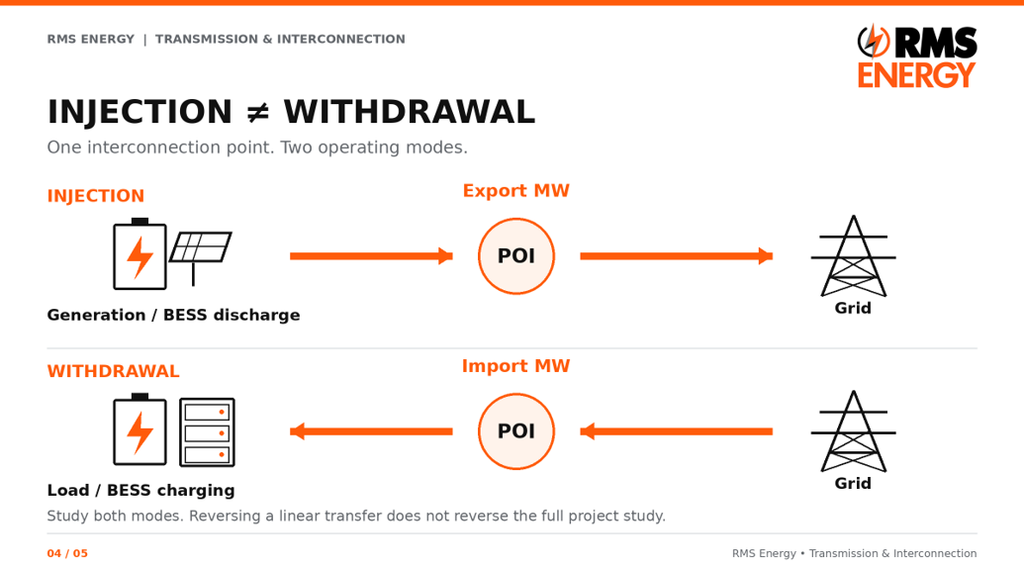
Figure 3. Generation and battery discharge export power; load and battery charging import power.
For BESS and hybrid projects, define discharge, charging, simultaneous operation limits, and auxiliary load separately. For a large load with on-site generation, test the maximum grid import when that generation is unavailable, as well as any permitted export condition. A near-zero normal net exchange does not establish acceptable performance when a generator trips or a large block of load disconnects.
NERC’s large-load guidance recommends site-specific dynamic models and, where appropriate, EMT models. It highlights voltage recovery, load trip and reconnection behavior, reactive support, and controls such as UPS transfer logic. These are project behaviors that a static injection heat map cannot establish.
Limitations that can change a siting decision
Model vintage and queue assumptions matter. New projects, withdrawals, retirements, load forecasts, and upgrade schedules can change the apparent margin. A favorable result in a case containing an assumed future upgrade can depend on that upgrade being completed. Record the case name, study horizon, scenario, and refresh date with every screen.
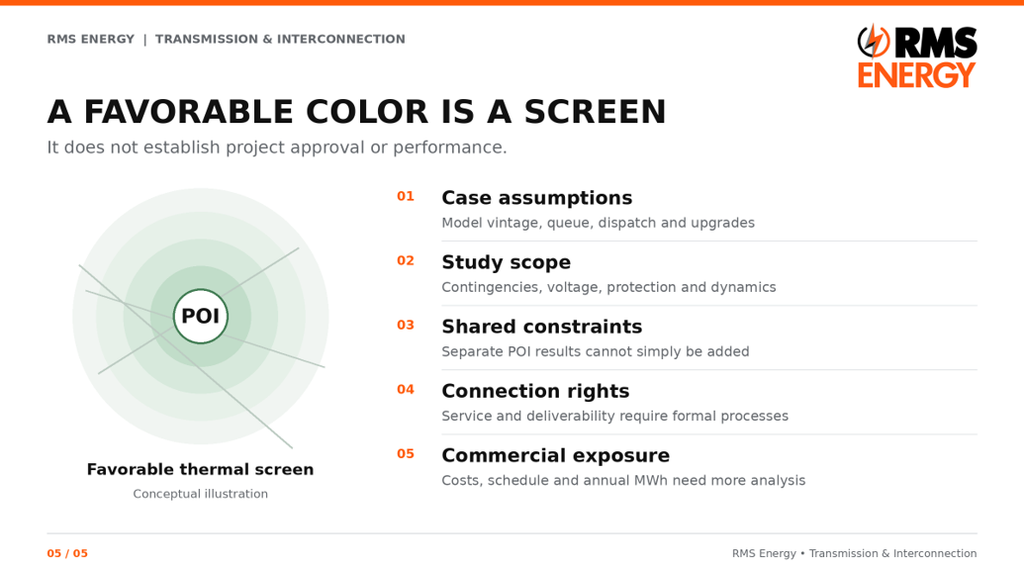
Figure 4. A favorable screening color leaves several project-specific questions unresolved.
The contingency set and monitored scope matter. A single-outage thermal screen does not establish performance for every applicable breaker failure, common-mode outage, sequential outage, extreme event, or transmission-owner criterion. The detailed scope depends on the region and project. ISO New England explicitly cautions that its heatmap does not represent all relevant system conditions or the full project list used in an interconnection study.
Consider a hypothetical 200 MW project. A heat map may suggest sufficient injection headroom at the selected POI. A detailed injection study using project-specific assumptions may show that the loss of a nearby transmission line overloads another corridor, requiring network upgrades. Even if the project can interconnect and inject energy, capacity deliverability may require additional upgrades under the applicable regional rules. The map is a useful starting point; it is not a project-specific determination.
Map colors are not independent buckets of capacity. Two POIs can rely on the same line or transformer. If both show 200 MW when studied separately, their combined capability may be materially less than 400 MW. ISO New England’s non-cumulative-results note makes this limitation explicit.
A thermal margin does not establish voltage or control performance. Reactive capability, transformer taps, weak-grid behavior, fault clearing, and inverter or load control interactions can require mitigation even when branch loading appears acceptable. Short-circuit duty, protection, and EMT concerns require the appropriate additional analyses; an SCR estimate alone does not validate dynamic performance.
Interconnection costs and buildability are different outputs. Bay availability, station layout, protection changes, outages needed for construction, rights of way, and long-lead equipment can determine feasibility and schedule. An overload percentage is not an upgrade scope or cost allocation. Public maps may also suppress sensitive network information, preventing a user from reproducing a full study from the map alone.
Annual commercial performance needs a separate assessment. A planning snapshot does not quantify annual MWh, congestion exposure, curtailment frequency, basis risk, or the ability to serve load during every hour. Assess those issues with an appropriately defined chronological production cost or dispatch analysis and operational sensitivities.
What a detailed project study should produce
A developer’s independent study can assess risks before queue entry and support project decisions. The ISO or RTO and transmission owner still determine official requirements, rights, and upgrades through their governing processes. The following scope is an engineering recommendation and should be tailored to the project and applicable criteria.
| Analysis | Question it answers | Useful output |
| POI screen | Which locations merit further investigation under the selected case? | Candidate ranking and preliminary limiting facilities |
| Energy injection study | Can the proposed facility export its requested MW under applicable criteria? | Project impacts by scenario and contingency with mitigation options |
| Withdrawal or charging study | Can the grid supply the specified load or charging demand? | Import limits, voltage and thermal constraints, and operating dependencies |
| Capacity or network deliverability study | Can the requested service be supported under the regional deliverability method? | Deliverability constraints and upgrades for the requested service |
| Chronological operating assessment | What happens over representative operating hours? | Congestion, curtailment, charging, and load-service exposure |
Start with a project-specific network representation: the exact bus or line tap, substation arrangement, generator lead or load supply lines, transformers, collector system, reactive equipment, and operating limits. Use current planning cases and credible alternatives for queue withdrawals, delayed upgrades, load growth, and generation availability.
Run AC power flow and contingency analysis to assess both thermal and voltage performance. Apply the region’s actual deliverability dispatch and criteria for the requested service. Add short-circuit and protection review, dynamic stability, and EMT analysis where the facility characteristics or applicable requirements warrant them. Validate the models used for these tests.
For injection projects, cover the required output and service levels rather than assuming the nameplate rating equals the requested deliverable capacity. For withdrawal projects, cover the phased and ultimate load, power factor or reactive envelope, supply contingencies, ramping, trip and reconnection behavior, and any dependence on on-site generation or storage.
The report should identify each binding constraint, the relevant scenario and contingency, the project’s incremental contribution, feasible mitigation, and assumptions behind the remaining margin. Evaluate practical connection arrangements and upgrade dependencies with the transmission owner. Cost and schedule ranges should state their estimating basis and distinguish independent estimates from official assignments.
Using heat maps in a development workflow
Use the map to narrow a broad list of candidate sites. Preserve the results and assumptions, then study the most promising POIs at the actual project size and in each relevant operating mode. Resolve energy export, grid withdrawal, and capacity deliverability questions separately before combining them into one investment decision.
Before committing to a site, establish which constraints remain under the applicable study scope, which upgrades or operating limits are needed, and which conclusions depend on uncertain queue or transmission assumptions. A credible site recommendation explains the conditions under which the project works. The map is the starting evidence for that investigation.
Learn how RMS Energy supports complex transmission projects here: T&D engineering and consulting services
#RMSEnergy #POIHeatMaps #Interconnection #PowerFlow #PowerSystemEngineering #TransmissionPlanning #GridPlanning #CapacityDeliverability #GridReliability #RenewableEnergy #EnergyStorage #BESS #DataCenters #ProjectDevelopment #PJM #MISO #SPP #CAISO #ISONE #NYISO #ERCOT