

What generation and large load developers should take from the October 26 workshop
A shorter study process can help developers make an earlier investment decision. It cannot, by itself, build a transmission line, secure a transformer or guarantee that a data center receives its full requested power on a particular date.
PJM’s October 26 Fast Energization presentation proposes a coordinated annual process for generation, merchant transmission and transmission-service requests, including large loads. The most useful change is the connection between early screening, an integrated upgrade plan and a delivery-year schedule of interim rights.
The proposal remains in stakeholder development. The presentation identifies a planned November 16 FERC filing. Its dates, deposits, service products and agreement provisions should not be treated as approved requirements.
Why PJM wants generation and load studied together
Today, generation and large-load integration can reach transmission planning through different paths. PJM describes generation applications moving through review, a multi-phase study and agreement execution, while large-load integration involves transmission-owner work, M-3 supplemental upgrades, Do No Harm studies and the large-load forecast adjustment process.
Those activities do not always move together. PJM says the existing large-load Do No Harm work does not provision firm Network Integration Transmission Service. Firm NITS is determined through the annual Regional Transmission Expansion Plan, or RTEP, where additional transmission needs are identified and upgrades receive approval.
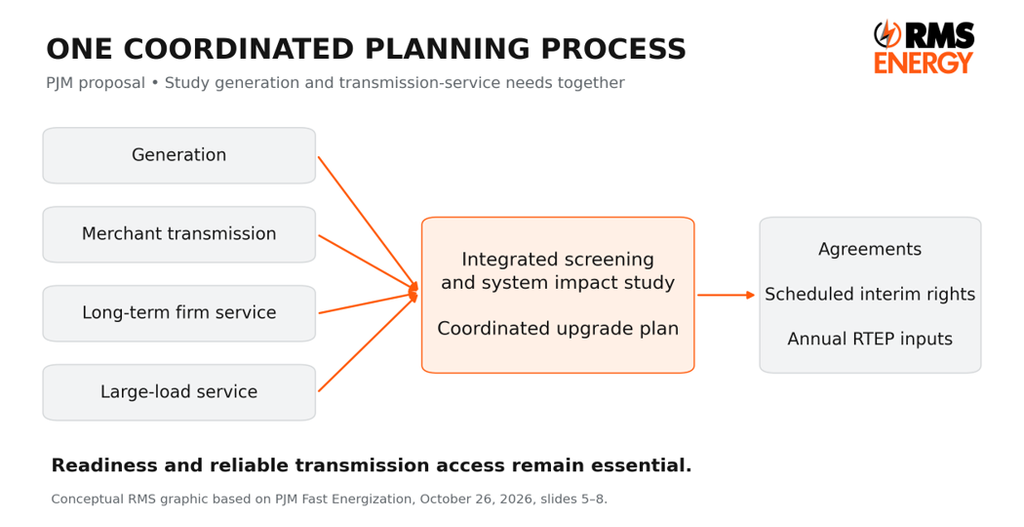
Figure 1. Proposed coordination across generation, merchant transmission and transmission-service studies. Source concept: PJM slides 5–8.
The proposed process would bring the relevant requests into a common study cycle and supply updated results to RTEP each year. PJM intends the resulting transmission plan to show what drives the enhancements and what interim service is available when developers make their final contractual commitment.
For a developer, that means the application configuration has commercial consequences. A campus’s import demand, co-location arrangement and requested transmission service need to be consistent with the generation project and the network assumptions used in the studies. Co-location should not be assumed to remove the need to assess the site’s grid-facing behavior.
The engineering objective is a coordinated plan that explains which upgrades are required, when rights become available and what can operate before the final network configuration is complete.
What the proposed 12 month clock actually covers
The detailed schedule in the workshop is a 52-week process measured from the application deadline to the next annual kickoff. It contains 16 weeks of screening, 29 weeks of System Impact Study, five weeks of final agreement work and a two-week buffer. The presentation places another 14 weeks of early application engagement before that clock.
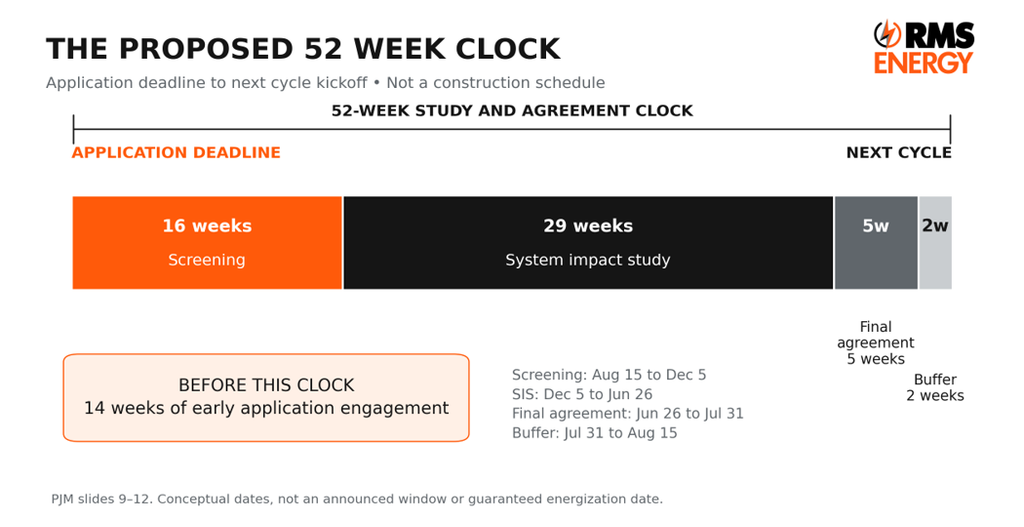
Figure 2. Detailed proposed cycle using the week counts shown by PJM. Dates are conceptual and do not establish an application window. Source: slides 9–12.
The slide’s example runs from an August 15 application deadline to the following August 15. Screening ends December 5; the System Impact Study runs to June 26; final agreement work runs to July 31. These are design milestones in a workshop schedule, not a confirmed opening and closing calendar for a specific future cycle.
PJM’s high-level summary rounds the process into four months of screening, seven months of impact study and one month of agreement finalization. The detailed week-based graphic is more useful for understanding where the time is allocated.
The distinction matters when a project is marketed as ready for fast energization. Completion of the study and agreement process is different from completion of network upgrades, permitting, procurement, commissioning and operating approvals. Construction time still depends on the facilities identified and the delivery schedule accepted by the relevant parties.
A shorter decision calendar therefore increases the value of preparation before the application deadline. Developers need sufficient technical and commercial maturity to act on study results within the proposed decision windows.
Earlier readiness and faster financial decisions
At the proposed Soft Close Date, a request would identify the POI, megawatts, co-location arrangement, fuel type or transmission-service elections, site plan and study deposit. New applications would not be accepted after that point. The subsequent application deadline would require verified site control, a permit matrix and technical data, plus initial readiness funding and transmission-owner approval to proceed, including a signed cost recovery agreement (CRA) for large load.
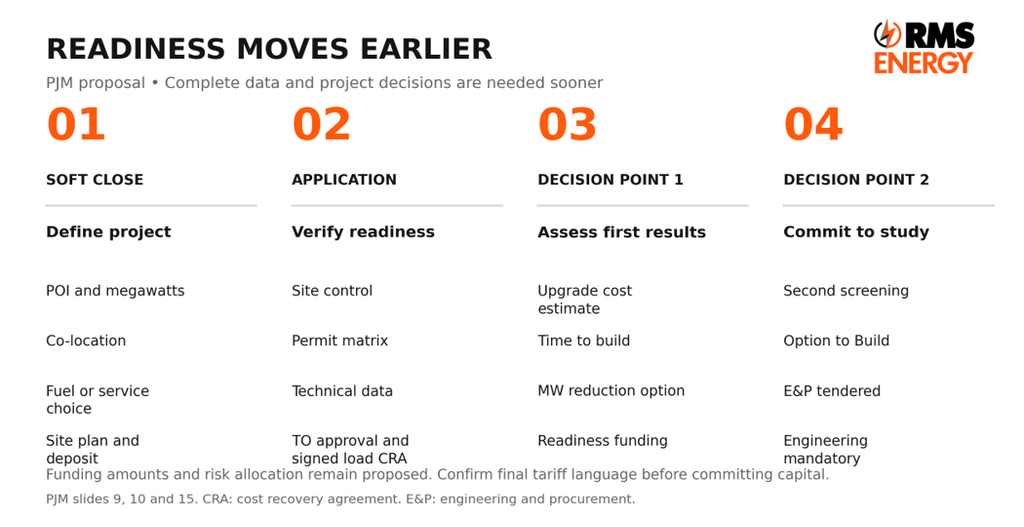
Figure 3. Readiness and decision points summarized from PJM slides 9, 10 and 15. Financial values and final tariff applicability remain subject to the proposal process.
Screening would have two turns and two decision points. PJM and the transmission owners would provide preliminary desk-side estimates of reinforcement costs and time to build. The first turn would allow a project to reduce megawatts; the second includes the generation Option to Build (OTB) election.
The important financial issue is when a developer must commit capital against those preliminary results. The slides show proposed readiness payments and increasing at-risk commitments. The monetary design still carries estimates and unresolved generation values; developers should confirm final amounts, cost bases, withdrawal treatment and security obligations before authorizing funds.
An Engineering and Procurement Agreement would be automatically generated and tendered at Decision Point 2. The engineering portion would be mandatory and procurement optional. That structure could advance engineering while final technical and contractual work continues, but it should not be read as eliminating equipment lead-time or construction risk.
Scheduled interim deliverability could change project phasing
PJM proposes calculating a schedule of interim deliverability during the final full study phase, extending from the next delivery year until full rights can be provided. The schedule would be incorporated into the final agreement and would establish minimum rights for each delivery year based on anticipated system topology.
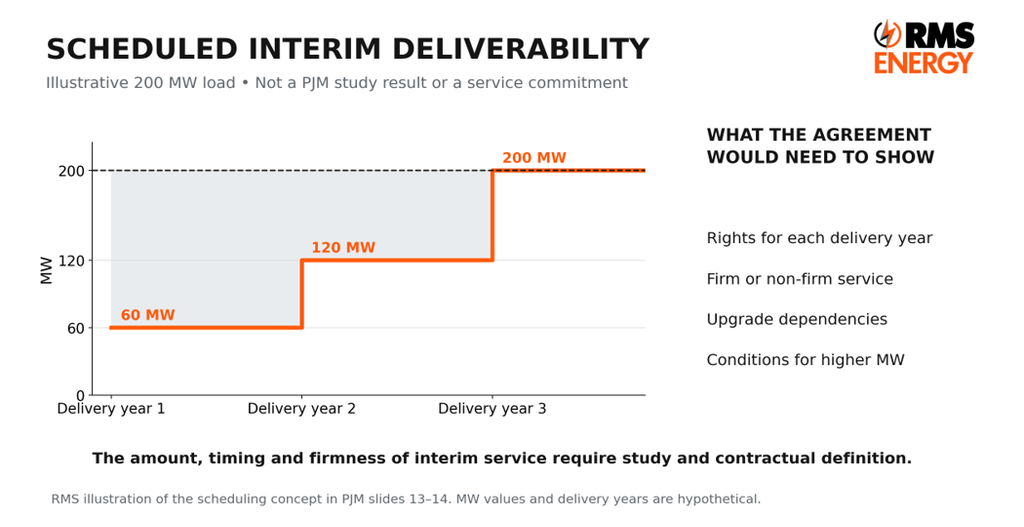
Figure 4. Hypothetical 200 MW load showing how staged service could align with campus buildout. Values are illustrative; PJM has not studied or committed this example.
For generation, the presentation describes CIR and energy schedules. For large loads, it identifies Fractional NITS and Interim NITS. Its service-product diagram labels F-NITS as firm and I-NITS as non-firm, while Contract Demand Service is shown with firm and non-firm forms.
The diagram marks non-firm I-NITS and non-firm CDS as having bases for both resource-inadequacy curtailment and local transmission-constraint curtailment. The actual rights, triggers and obligations must come from the governing service documents. The slide does not establish an annual cap on curtailment hours.
For an illustrative 200 MW campus, a studied schedule might support 60 MW in the first delivery year, 120 MW in the second and 200 MW in the third. The developer could then compare that schedule with building phases, customer commitments and any approved flexibility or on-site supply arrangement. Those MW values are an explanation of the concept, not PJM results.
PJM would also run a prompt interim-deliverability assessment to determine whether a higher MW level is available as upgrades are completed or other queue projects withdraw. A potential increase should remain separate from the minimum service rights already established in the agreement.
The full reliability study remains necessary
PJM describes the System Impact Study as broadly comparable to the present cycle’s Phase III. The proposed analysis includes generation and load deliverability, N-1 and N-1-1 thermal and voltage testing, short circuit, stability and transmission-owner criteria across stressed summer, winter and light-load conditions. The purpose is to confirm that reliability issues have been addressed and the appropriate transmission has been scoped.
The workshop does not create a new standalone EMT submission deadline or a universal PSCAD test package. EMT, dynamic-model and as-built obligations need to be checked against the applicable PJM guidelines and final process documents. From an engineering standpoint, developers should obtain consistent equipment data, one-lines, models and operating assumptions early enough to support the accelerated study sequence.
Agreement negotiation would run alongside the study
PJM proposes drafting final agreements using second-turn screening and preliminary impact-study results, then circulating them while the System Impact Study continues. Developer and transmission-owner comment periods are shown as 15 business days each, followed by PJM responses and negotiation. Agreements would be refreshed at study completion.
The final execution sequence gives the developer 10 business days to sign, request alternative dispute resolution or request an unexecuted filing, followed by 10 business days for the transmission owner and then PJM signature. The slide expressly states that deposits remain at risk regardless of those developer elections.
What developers should prepare now
- Confirm the service configuration before filing. Align generation output, load imports, co-location assumptions and NITS or CDS elections with the intended operation.
- Prepare a consistent technical package. Reconcile the site layout, POI, ratings, study models and planned equipment before the readiness deadline.
- Evaluate upgrade timing as well as cost. Preliminary estimates should support a development decision without being mistaken for a fixed construction commitment.
- Build financial approvals around decision windows. Review security, withdrawal exposure and agreement-signing authority while screening is underway.
- Model the commercial value of staged rights. Separate minimum contractual rights from possible additional interim MW and account for non-firm service exposure.
What happens next
The October 26 presentation lists an October 28 informational MRC presentation, November 5–6 member and TOA-AC notices, and a November 16 FERC filing. These are the workshop’s planned next steps, not an implementation approval. Final tariff language, regulatory action and transition provisions will determine which projects can use the process.
Developers can prepare by aligning a mature project configuration and reliable study inputs with a commercial plan based on the rights available in each delivery year.
Learn how RMS Energy supports complex transmission projects here: T&D engineering and consulting services
Source
PJM Fast Energization presentation and Co-Located Load Order Workshop materials