
Where EMT Models Are Required and When They Are Due
An ISO RTO comparison from interconnection application through commissioning and as built verification
The question is no longer whether an inverter-based project will need an electromagnetic transient model. The more important question is when the applicable ISO or RTO will require it and whether the project team can deliver a site-specific validated model at that milestone.
That timing now varies significantly by region. ISO New England may require the PSCAD package with the interconnection request for a large generating facility. MISO is moving its newest cycles to application-stage submission. PJM places the first broad milestone at Decision Point II under its published rollout. ERCOT carries dynamic model obligations through the Full Interconnection Study and Quarterly Stability Assessment process into commissioning. SPP and NYISO use conditional triggers tied to screening or the decision to perform an EMT study. CAISO has not established a universal EMT submission milestone in its generator interconnection process.
For developers, original equipment manufacturers and consultants, these differences affect procurement language, study schedules and queue risk. A model requested at application must be planned much earlier than one requested after screening. A model accepted for an interconnection study may also need revision before commissioning when plant controls, transformers, cables or protection settings change.
The distinction between model submission and study selection
A requirement to submit an EMT model does not mean that every project will receive a full network EMT study. Several regions collect models broadly so they are available for screening, benchmarking, future planning cases or later operating studies. The transmission provider may then decide whether a detailed EMT study is needed based on system strength, control interaction risk, critical clearing time, nearby inverter concentration or other technical indicators.
The practical consequence is straightforward. A project cannot wait for a detailed study notice before securing model access. The executable model, documentation, Model Quality Test results and comparison against the positive-sequence model may be due before the transmission provider decides whether to run the full EMT analysis.
How to read the regional comparison
- Required identifies a published submission obligation for the facility class described in the article.
- Expanding identifies a staged rollout whose coverage and timing depend on the applicable transition or queue cycle.
- Conditional means that screening results or the decision to perform an EMT study activates the model requirement.
- Not universal means that no queue-wide milestone was found, although project-specific planning or operating obligations may still apply.
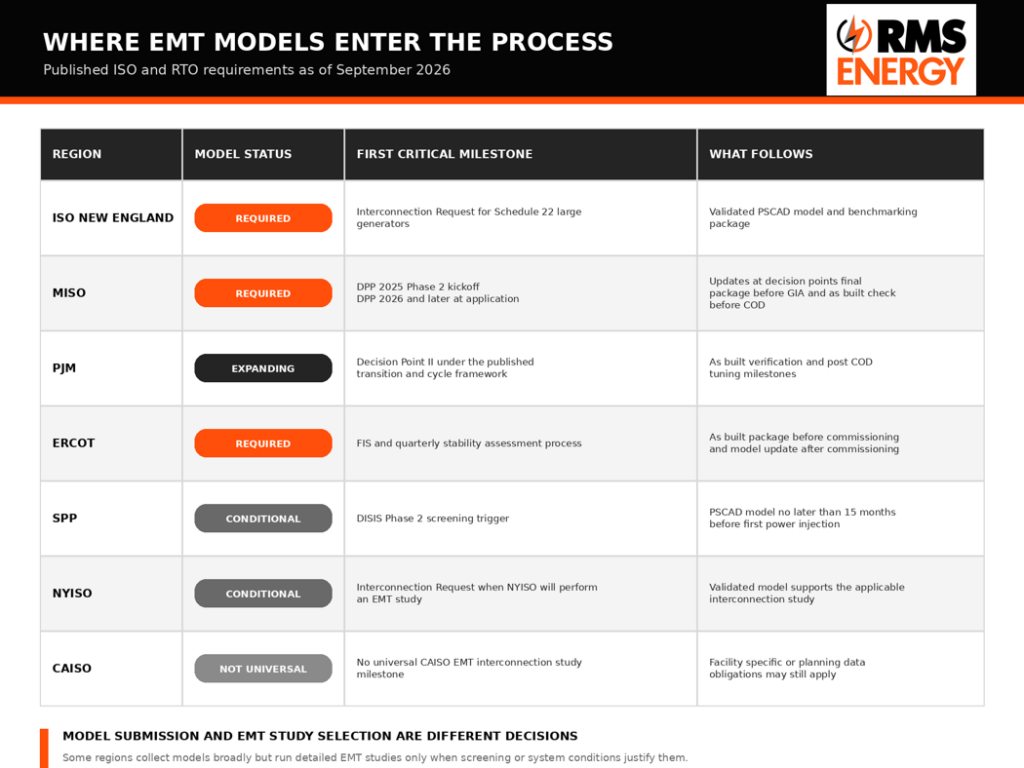
Figure 1 First material EMT milestones in published regional processes Model collection does not automatically mean detailed EMT study selection
Regional requirements and timing
ISO New England
ISO New England is among the clearest application-stage examples. Under Schedule 22 Appendix 1 for large generating facilities, technical data for non-synchronous generators include a validated EMT model. Wind and other inverter-based facilities must supply a PSCAD model with Attachment A, together with benchmarking analysis in Attachment A or A-1. The requirement therefore enters the process with the interconnection request rather than after the cluster study begins.
Project teams pursuing a Schedule 22 interconnection should treat the PSCAD package as application readiness work. Waiting for study kickoff can create an avoidable completeness or schedule problem.
MISO
MISO has adopted one of the broadest lifecycle frameworks. Its July 2026 Business Practices Manual requires inverter-based resources to provide generic and user-written positive-sequence models, a PSCAD model, test results and benchmarking. The initial milestone depends on the Definitive Planning Phase cycle. For DPP 2025, the package is due by the Phase 2 kickoff. For DPP 2026 and later cycles, the initial package moves to the interconnection request.
The model does not become static after that first submission. MISO can require updates at Decision Points 1 and 2. A final four-model package is required before the Generator Interconnection Agreement is signed. Within 60 days before commercial operation, the project must show that as-built equipment and settings match the submitted models or provide updates. This sequence makes version control as important as initial model creation.
PJM
PJM is expanding EMT model collection through a staged rollout described in its March 2026 guidelines. Transition Cycle 2 projects are screened at the start of Phase II. Projects identified in low-system-strength conditions must provide the PSCAD model, checklist, Model Quality Test package and benchmark report at Decision Point II. For Cycle 1 and later cycles, PJM states that all bulk-power-system-connected projects will submit the PSCAD package at Decision Point II.
PJM also describes an as-built verification package and post-commercial-operation tuning under MOD-026 and MOD-027. Some effective dates remain subject to later communication, so developers should check the current cycle guidance before fixing a contractual delivery date. PJM may collect models broadly while reserving detailed network EMT studies for projects or areas that show system strength, control interaction or performance risks.
ERCOT
ERCOT uses a lifecycle model rather than a cluster queue milestone. During the Full Interconnection Study and Quarterly Stability Assessment process, resource entities submit dynamic models that include PSS®E, PSCAD and TSAT user-defined representations, along with Model Quality Test material. Final dynamic data and final FIS reports must reach the applicable QSA deadline at least 45 days in advance.
Before the Resource Commissioning Date, the resource entity provides as-built dynamic models, comparisons to the quarterly assessment data, overlaid Model Quality Test plots and supporting simulation files. No later than 30 days after the commissioning date, planning and operating models must be updated using as-built information and plant verification results. ERCOT therefore treats model fidelity as a commissioning obligation, not only a study input.
SPP
SPP applies a risk-based trigger. Its Definitive Interconnection System Impact Study Phase 2 process uses short-circuit-ratio and critical-clearing-time screening. If a project does not pass the applicable screen, SPP can require a detailed EMT study and a compliant PSCAD model. The Generator Interconnection Manual states that the model must be delivered no later than 15 months before the project expects to inject power into the SPP transmission system.
This approach gives the screening result a direct commercial consequence. A project that appears electrically strong in early planning may still need rapid OEM and consultant coordination if Phase 2 identifies a weak grid or fault recovery concern.
NYISO
NYISO uses a conditional application-stage requirement. Its interconnection request data requirements call for a validated EMT model when NYISO will perform an EMT study as part of the interconnection study process. The model therefore belongs in the application package when the condition applies, but the published language is not a blanket requirement for every project.
The key planning question is whether the proposed technology and point of interconnection are likely to trigger EMT analysis. Teams should resolve that question before the application package is finalized, because a site-specific model and validation evidence cannot usually be assembled at the last minute.
CAISO
CAISO currently stands apart from the broader queue trend. In its Order 2023 compliance filing, CAISO removed the pro forma reference to an EMT model because CAISO does not perform an electromagnetic transient study in its generator interconnection studies. Based on current published materials, there is no universal CAISO generator interconnection stage at which every project must submit an EMT model.
That does not eliminate EMT work in California. Participating transmission owners, planning studies, equipment-specific reviews or later operating requirements can still create model obligations. The narrower conclusion is that CAISO has not adopted a universal queue milestone comparable with ISO New England or MISO.
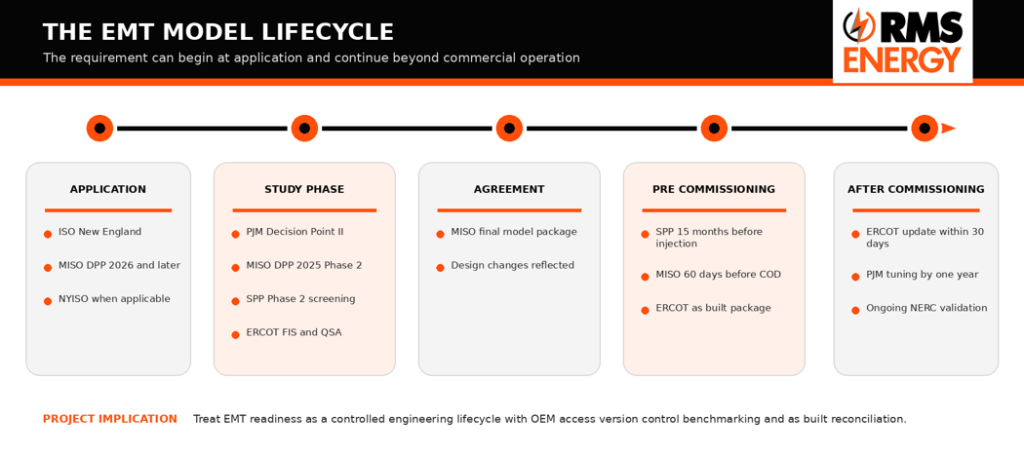
Figure 2 Typical points where regional rules can require a new submission confirmation or model update
What is likely to change next
The strongest nationwide driver is NERC Reliability Standard MOD-026-2, approved by FERC in February 2026 and effective April 1, 2026. The standard requires planning coordinators and transmission planners to develop dynamic model requirements and brings EMT models and verification into scope for applicable inverter-based resources. Compliance with Requirements 1 and 7 begins April 1, 2027, while Requirements 2 through 6 follow on April 1, 2029. The broader implementation schedule supporting FERC Order 901 runs through January 1, 2030. MOD-026-2 does not prescribe a single queue milestone for every ISO or RTO. It does create sustained pressure for regions to formalize model collection, validation, version management and periodic review. PJM has already described broader cycle coverage. In the West, WECC is developing regional modeling requirements for inverter-based resources and EMT screening criteria through project WECC-0160. These efforts make expanded western requirements plausible, but they should not be represented as an announced CAISO interconnection mandate until CAISO publishes one.
ERCOT also shows where the next category may emerge. Pending Planning Guide Revision Request 144 would extend dynamic model, Model Quality Test and validation concepts to certain large loads, including large computational loads. If approved, the EMT conversation will increasingly cover both new generation and the rapidly growing demand side of the grid.
What developers should do now
- Write executable model access, update rights and technical support into equipment procurement agreements. A black box model that cannot be revised or debugged can become a queue and commissioning constraint.
- Build the site-specific model early enough to include plant controls, transformer data, collector impedance, reactive devices and protection logic. A generic OEM unit model is rarely the complete plant representation.
- Reserve time for Model Quality Testing and RMS/EMT benchmarking before the formal due date. Passing a basic simulation is not the same as demonstrating consistent behavior across the required disturbances.
- Maintain a controlled register of model versions, firmware, parameters and study submissions. Every design change should trigger an explicit decision on whether the PSCAD and positive-sequence models need revision.
- Reconcile the as-studied model with the as-built facility before commissioning. This is where transformer taps, cable lengths, controller limits and plant-level settings often diverge from the original study assumptions.
How RMS Energy supports EMT readiness
RMS Energy helps project teams translate regional rules into an executable model plan. That work can include milestone mapping, OEM model review, site-specific PSCAD integration, Model Quality Testing, RMS/EMT benchmarking, study support, mitigation evaluation and as-built parameter reconciliation. The objective is to produce a technically defensible package at the point when the applicable ISO or RTO expects it and to keep that package aligned as the project design matures.
The immediate opportunity for developers is to make EMT readiness part of interconnection strategy rather than a late study response. Regions differ on the first due date, but the direction is consistent. More inverter-based projects will need validated site-specific models, and those models will follow the facility further into commissioning and operations.
Learn how RMS Energy supports complex transmission projects through our T&D Engineering and Consulting Services
Sources and scope
This article summarizes publicly available requirements and guidance reviewed through September 2026. Tariffs, manuals and cycle procedures can change. Project teams should confirm the current tariff, business practice manual and study notice that apply to their specific queue position, facility type and point of interconnection.
1. PJM EMT Model Development Guidelines March 2026
2. MISO Generator Interconnection Business Practices Manual
3. MISO Inverter Based Resource Modeling Requirements proposal
4. ISO New England Schedule 22 Appendix 1 Large Generator Interconnection Request
5. ERCOT Planning Guide April 1 2026
6. ERCOT Resource Integration Topics April 2026
7. SPP Generator Interconnection Manual March 2026
8. SPP EMT Model Requirements Revision 1
9. NYISO Interconnection Request Data Requirements
10. NYISO Electromagnetic Transient Modeling Guideline
11. CAISO Order 2023 Compliance Filing May 2024
12. CAISO Electromagnetic Transient Modeling Requirements
13. NERC MOD 026 2 Reliability Standard
14. FERC February 2026 Commission Meeting Summary
15. WECC 0160 Inverter Based Resource Modeling and EMT Screening Criteria
16. ERCOT Planning Guide Revision Request 144
#RMSEnergy #EMTModeling #PSCAD #GeneratorInterconnection #InverterBasedResources #GridReliability #PowerSystems