

(Aug 20,2026 ESPWG)
A concise look at the service options, operating rules, and capacity strategies that could shape major new demand in New York
Key takeaways from the Aug. 20, 2026 ESPWG meeting | By RMS Energy
| THE CENTRAL SHIFT: NYISO is moving toward a framework in which large loads become active market and reliability participants. Firmness, flexibility, ramping, capacity support, and co-location may need to be addressed as one integrated development strategy. |
New York is moving from concept to implementation
NYISO’s Aug. 20 Electric System Planning Working Group (ESPWG) meeting provided a clearer view of how large and co-located loads could connect to and operate on the New York grid. The emerging question is no longer only whether the system can accommodate fast-growing demand, but under what service, market, cost-allocation, and operational conditions it may be served.
The agenda included seven Load System Impact Study scopes and eight completed study reports, many involving data-center projects. At the same time, NYISO is developing its response to FERC’s June 18, 2026 Show Cause Order and working toward a Section 205 filing due Nov. 16, 2026. The proposal remains draft, but the direction is becoming much clearer.
| 3 PATHS Firm, non-firm, partial-firm | $200/MWh Proposed NFWS bid cap | 100 MW/MIN Proposed NYCA-wide ramp limit | 15 YEARS Partner/co-location term |
1. The BELL study could lead to three service pathways
The Bulk Electric Load Level (BELL) study would evaluate whether a new large load creates a material transmission-security or resource-adequacy impact. That result could lead to Firm Withdrawal Service (FWS), a partial-firm arrangement, or a choice between capacity-backed contingent firm service and Non-Firm Withdrawal Service (NFWS).
FWS would provide full withdrawal rights, subject to normal emergency procedures, while NFWS would exchange firmness for operating flexibility. A partial-firm option could combine a firm minimum demand with a dispatchable non-firm range. Importantly, NFWS would not be a unilateral customer election; it would need to be offered through the BELL results and supported by credible 5-minute dispatch capability.
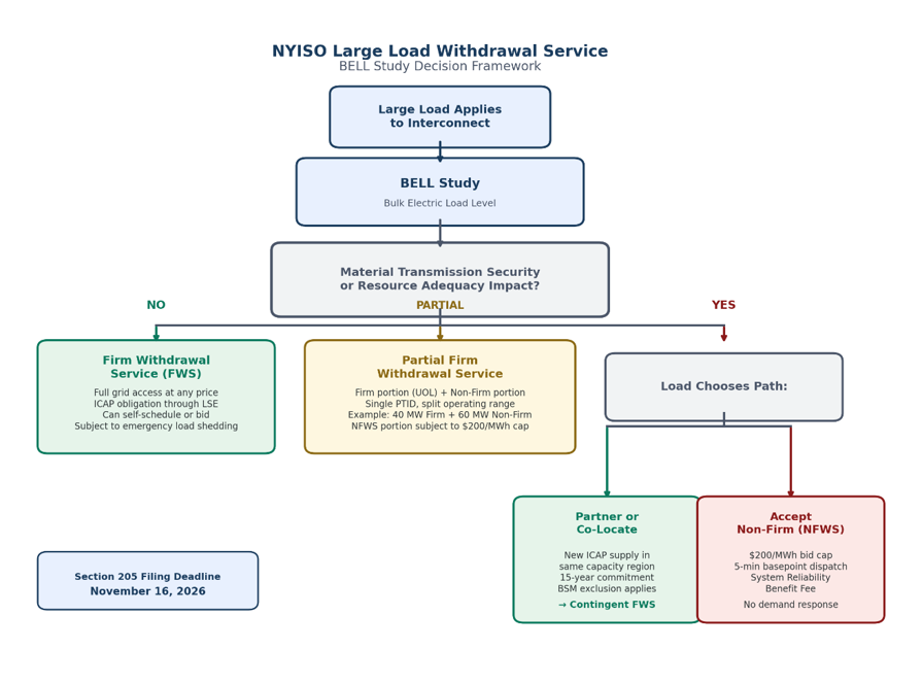
Figure 1. The proposed BELL study decision framework connects study results to firm, partial-firm, contingent-firm, or non-firm service.
2. Flexibility would become an enforceable market obligation
For NFWS, flexibility would be translated into specific operating requirements rather than treated as a general promise. Non-firm loads would participate in the Day-Ahead and Real-Time Markets, follow 5-minute basepoints, accept dispatch or out-of-merit instructions, and operate under a proposed $200/MWh bid cap. Projects would therefore need controls that can convert a market signal into measurable physical load movement.
NYISO also proposes a System Reliability Benefit Fee for NFWS loads. The fee is intended to recognize that non-firm loads still receive reliability value when the system is not stressed, even though they would not create the same installed-capacity obligation as firm loads.
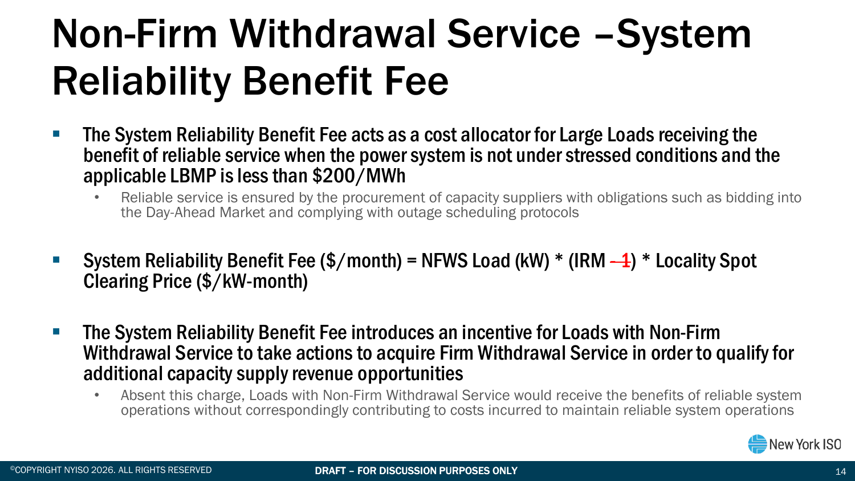
Figure 2. NYISO’s proposed System Reliability Benefit Fee would allocate a portion of reliability-support costs to non-firm loads.
3. Ramp rates would become a system-wide coordination issue
In addition to the 20 MW/minute limit under discussion for each large load, NYISO proposed a 100 MW/minute aggregate limit across the New York Control Area. For modular facilities, compliance may affect commissioning sequences, workload transfers, backup-generation transitions, storage controls, and restart procedures.
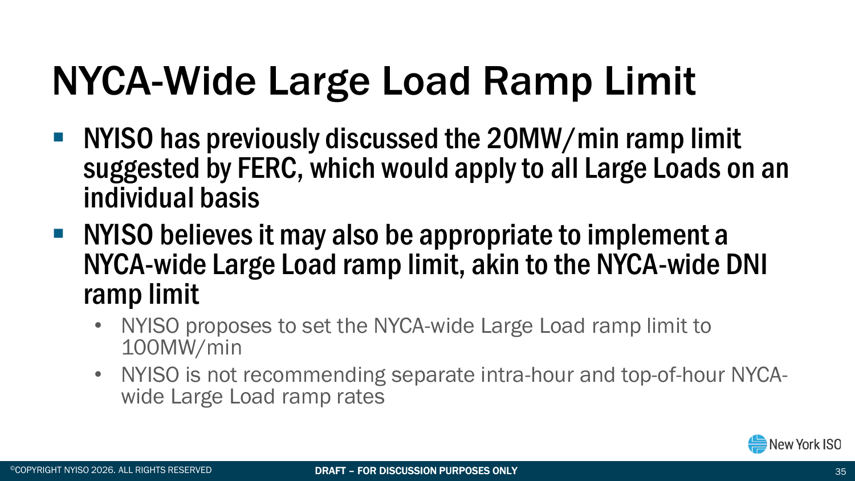
Figure 3. NYISO proposes a 100 MW/minute NYCA-wide large-load ramp limit in addition to the individual-load limit under discussion.
4. Capacity strategy and co-location would move to the front of development
If a BELL study identifies a resource-adequacy impact, a large load could remain non-firm or seek contingent FWS by partnering with new installed-capacity supply. NYISO is considering physical co-location as well as partnerships with new capacity within the same capacity region. This would connect site selection, power-supply strategy, and capacity procurement much earlier in the development process.
The proposed association would last 15 years. If the supporting resource becomes ineligible or exits the capacity market during that period, the load could lose firm-service eligibility unless an approved replacement is established. That creates long-term performance, replacement, credit, and change-control obligations that will need to be addressed contractually.
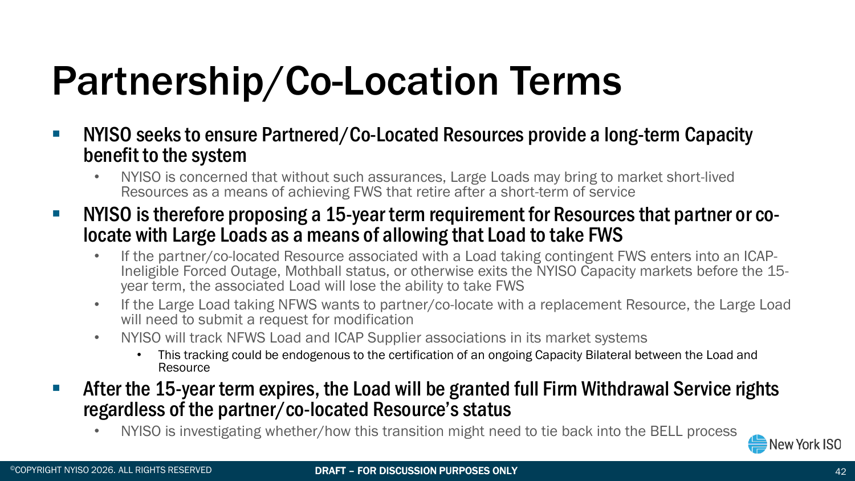
Figure 4. NYISO proposes a 15-year term for resources that enable a large load to receive contingent firm withdrawal service.
Co-located assets would remain separate market participants
NYISO’s developing co-location model would treat load and generation as separate market assets, even when they share a point of interconnection. Each component would have its own identifier, schedule, telemetry, metering, and settlement, while controls would keep the combined import or export within the facility limit. NYISO is also proposing gross settlement, 6-second telemetry, and dedicated transmission-node modeling for demand-side resources above 20 MW.
What Should NYISO Market Participants Watch?
Key dates to track: September 1 — planning discussion at ESPWG. September 8 — market design at ICAPWG (CLR examples, settlement rules, BSM exclusion). Mid-September — initial tariff draft review at ICAPWG. October 14 — BIC presentation and vote. October 15 — OC vote. October 28 — MC vote. November 16 — Section 205 filing deadline.
For large load developers: Understand how the BELL study determines FWS, NFWS, or Partial Firm eligibility. If your load has RA impacts, partnering and co-location options — including the 15-year commitment — require early planning.
For existing BTM:NG participants: The program will be sunset. Transition to the CLR model or another participation model is required. Gross demand accounting replaces net metering.
For generation developers: The CLR model and partnering framework create new market entry paths. The BSM exclusion for partnered generation and the option to bypass the Cluster Study are both new.
The schedule is compressed
NYISO’s schedule calls for continued stakeholder discussion in September, committee votes in October, and the Section 205 filing on Nov. 16. The short timeline makes early engagement important because key design details remain open.
RMS Energy perspective
RMS Energy sees the proposal as an important step toward integrating large, fast-moving demand while protecting reliability. Flexible loads, co-located generation, storage, and new capacity partnerships can become part of the solution when they are supported by transparent studies, workable market rules, and controls that perform as modeled.
For data-center and other large-load developers, the message is clear: interconnection, market participation, capacity strategy, physical design, and operating controls can no longer be planned separately. Projects that integrate these decisions early will be better positioned to navigate NYISO’s evolving process and convert flexibility into a bankable development advantage.
#NYISO #LargeLoadInterconnection #DataCenters #CoLocatedResources #WithdrawalService #GridPlanning #InterconnectionReform #ResourceAdequacy #EnergyMarkets #RMSENERGY