

Key takeaways from the Aug. 27, 2026 Large Load Working Group | By RMS Energy
| THE CENTRAL SHIFT: MISO is building a more formal framework for connecting very large loads: a dedicated study process, a 120-day path for paired load and generation, and new disturbance ride-through expectations for computational loads. |
Three issues, one emerging framework
The Aug. 27 LLWG materials point to a common goal: connect large new demand faster without weakening reliability or creating avoidable transmission investment. The proposals are still moving through stakeholder review, but the architecture is becoming much clearer.
1. A dedicated study process for large loads
MISO is considering replacing the load-specific portion of the existing Expedited Project Review framework with MTEP Large Load Project Reviews (LLPR).
- Recent EPR cycles averaged about 98–109 days.
- The proposed LLPR framework anticipates about 90 days of study work plus 30 days for agreements and final approval.
- Proposed requirements include an application fee, electric service agreement, possible EMT study requirements, and documentation of alternative transmission technologies.
The important shift is not simply a new name. Large-load integration is moving toward a defined application, study, reporting, and approval process.
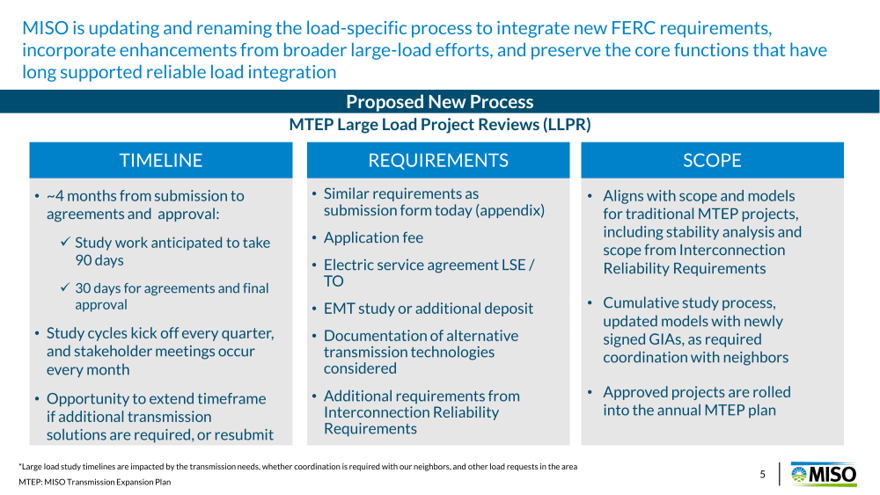
Figure 1. Proposed MTEP Large Load Project Review process.
Feedback deadline: Sept. 10, 2026.
2. LARS could cut paired load-generation studies from 180+ days to 120
MISO’s proposed Large Load Addition Resource Study (LARS) would study a large load and its associated generation in parallel instead of consecutively. The studies would remain separate, but use coordinated assumptions and finish at approximately the same time.
- Target timeline: 120 days, compared with 180+ days under sequential studies.
- Eligible loads: 250 MW or larger.
- Proposed entry conditions include a $250,000 nonrefundable application fee, firm offtake, same-LRZ geographic alignment, full site control, and required EMT modeling.
- Generation Interconnection Service would be capped at 150% of identified load need.
The intended outcome is more than speed: transmission service for reliable load withdrawal, allocation of generation Interconnection Service, and a more optimized set of network upgrades.
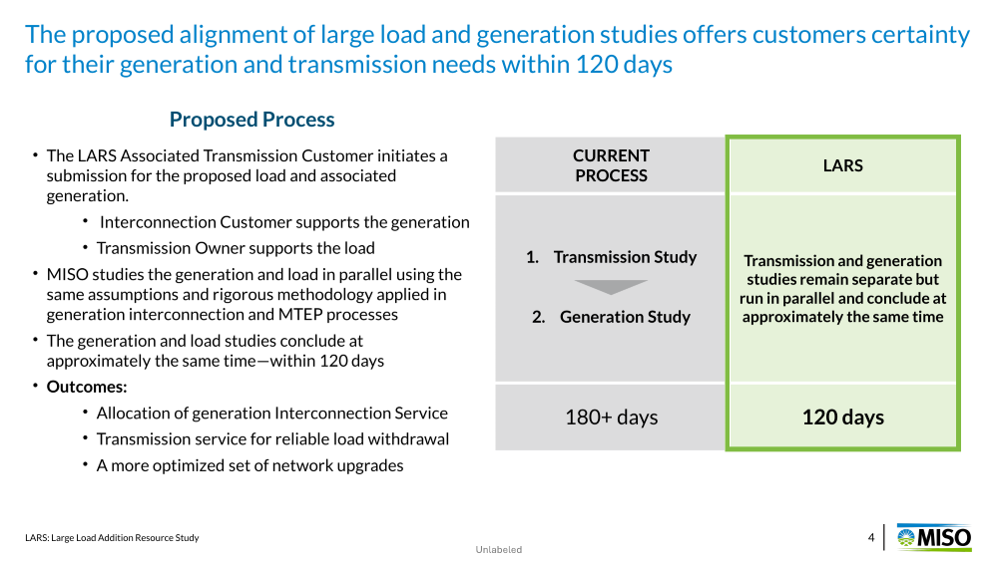
Figure 2. Current sequential process versus the proposed 120-day LARS framework.
Feedback deadline: Sept. 10, 2026.
3. Computational loads will be expected to ride through grid disturbances
MISO’s proposed BPM-032 requirements establish voltage and frequency ride-through expectations for computational/electronic large loads. The reliability concern is straightforward: a very large block of power-electronic demand disconnecting at once can turn a grid disturbance into a larger system event.
- Default recovery: restore at least 90% of pre-disturbance active power within 2 seconds after voltage recovers above 0.90 pu.
- Normal voltage region: maintain pre-disturbance active power between 0.90 and 1.20 pu.
- Frequency: continuous operation from 58.8 to 61.2 Hz.
- Additional expectations address multiple disturbances, phase jumps, V/Hz limits, RoCoF, and transient overvoltage.
MISO also proposes verification through planning studies, models, protection and control information, commissioning data, and operational measurements such as PMU and SCADA records.
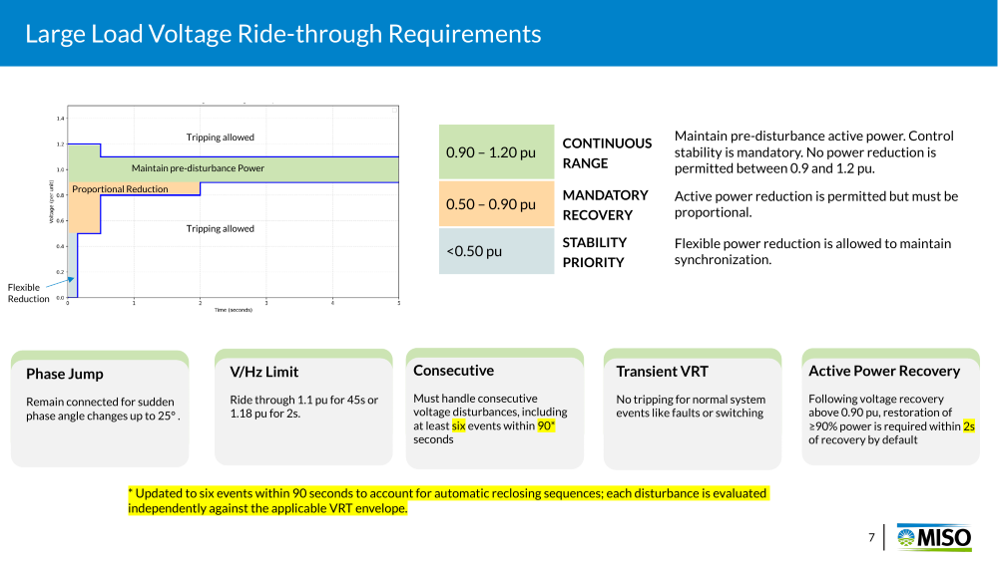
Figure 3. Proposed Large Load Voltage Ride-Through Requirements.
Feedback deadline: Sept. 8, 2026.
What stakeholders should watch now
- Sept. 8: Ride-through requirement feedback.
- Sept. 10: Large Load Application & Study Process and LARS feedback.
- Project readiness: Faster pathways come with stronger commercial, modeling, and site-control requirements.
- Process interaction: LLPR, LARS, MTEP, generator interconnection, and cost-shifting policy are becoming increasingly connected.
- Equipment capability: For computational-load developers, ride-through performance is becoming a design and planning requirement, not just an operating preference.
RMS Energy perspective
The most important takeaway from the Aug. 27 discussion is that MISO is no longer treating large-load growth as one isolated planning issue.
The emerging framework addresses the full lifecycle: prove the project is ready, study load and generation faster, identify the transmission solution, and make sure the connected load behaves predictably when the grid is disturbed.
For developers, that may mean faster pathways but higher expectations for readiness, modeling, coordination, and equipment performance. For planners, it means large loads are becoming a permanent part of the planning architecture rather than an exception at its edge.
#MISO #LargeLoads #DataCenters #TransmissionPlanning #GridReliability #LARS #PowerSystems #RMSEnergy
MISO Large Load Working Group | Aug. 27, 2026